When Every Walk Feels Like a Battle
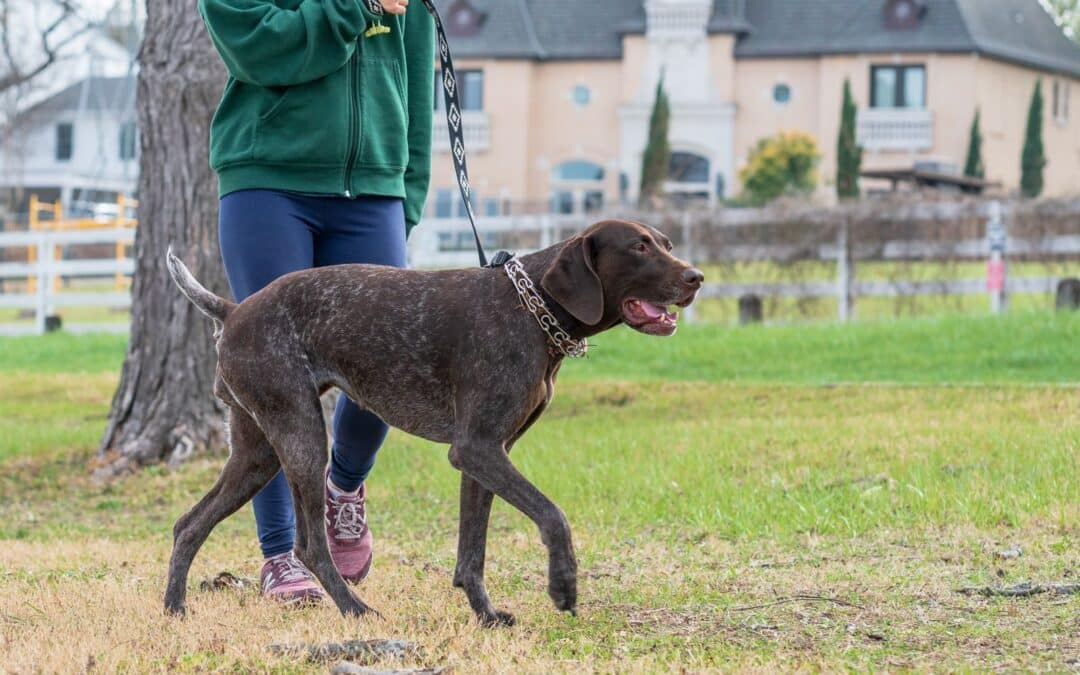
You know the feeling. You spot another dog coming down the sidewalk, and your stomach drops before your dog even notices. Then it happens the barking, the lunging, the pulling that nearly takes your arm off. You scan the street like a Secret Service agent, plotting your escape route behind the nearest parked car. Sound familiar?
Living with a reactive dog can feel suffocating. You start avoiding certain routes. You only walk at odd hours. You feel the eyes of strangers judging you when your dog loses it over a Golden Retriever who was just minding his own business. And to top it off, your own anxiety on the leash? Your dog feels that too and it can actually make the reactivity worse.
If walks have become something you dread instead of enjoy, I want you to hear this first: you are not a bad owner, and your dog is not a bad dog. Leash reactivity is one of the most common behavior challenges I see, and it does not automatically mean your dog is aggressive. A reactive dog is usually stressed, overwhelmed, or overexcited not mean.
At Ruff House Dog Training, I take a practical, humane approach to reactive dog training. Instead of forcing your dog to “just deal with it,” I focus on understanding your dog’s triggers and changing how your dog feels and behaves in the moment. I’m a Veteran owned, local trainer who travels throughout Washington, DC, Maryland, and Virginia, helping real families turn chaotic walks into calmer, more manageable ones.
What Is a Reactive Dog?
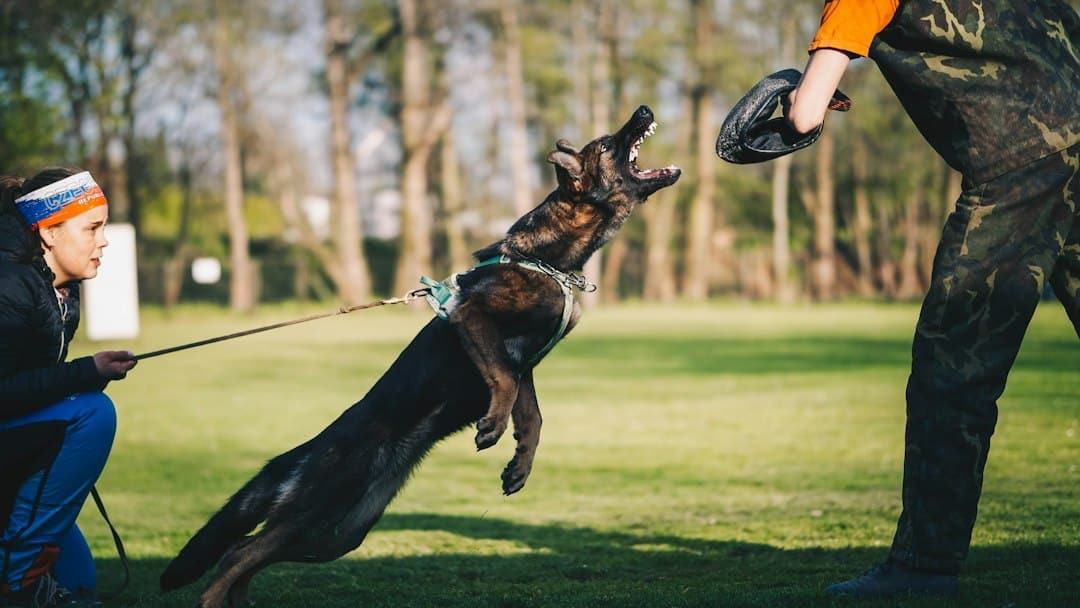
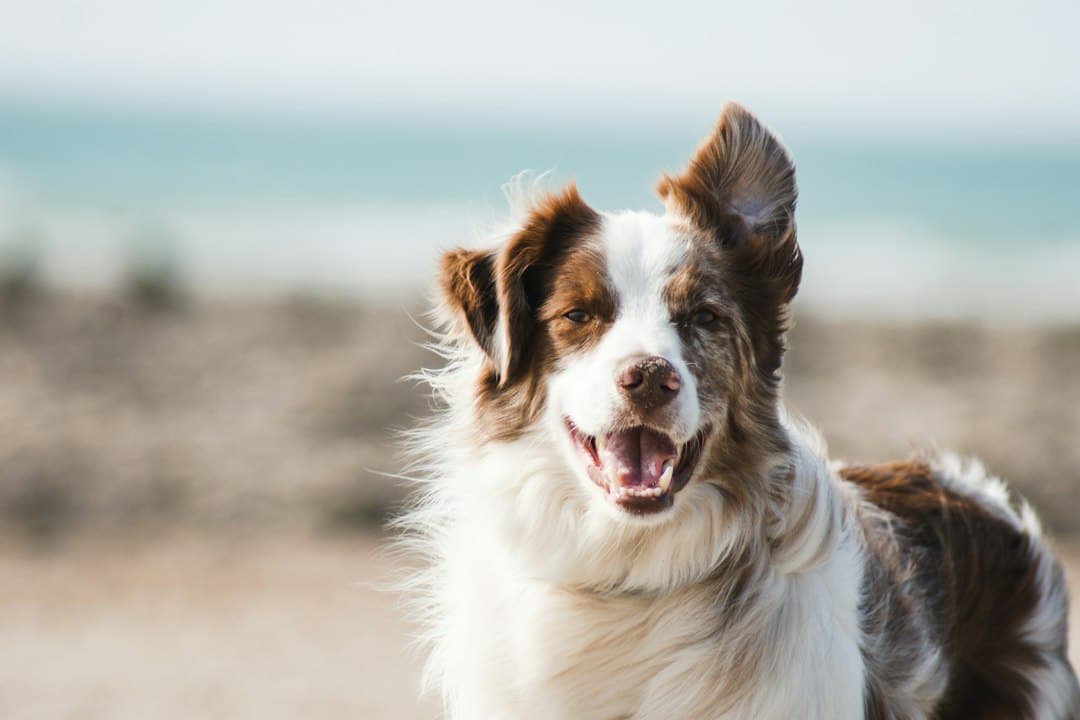
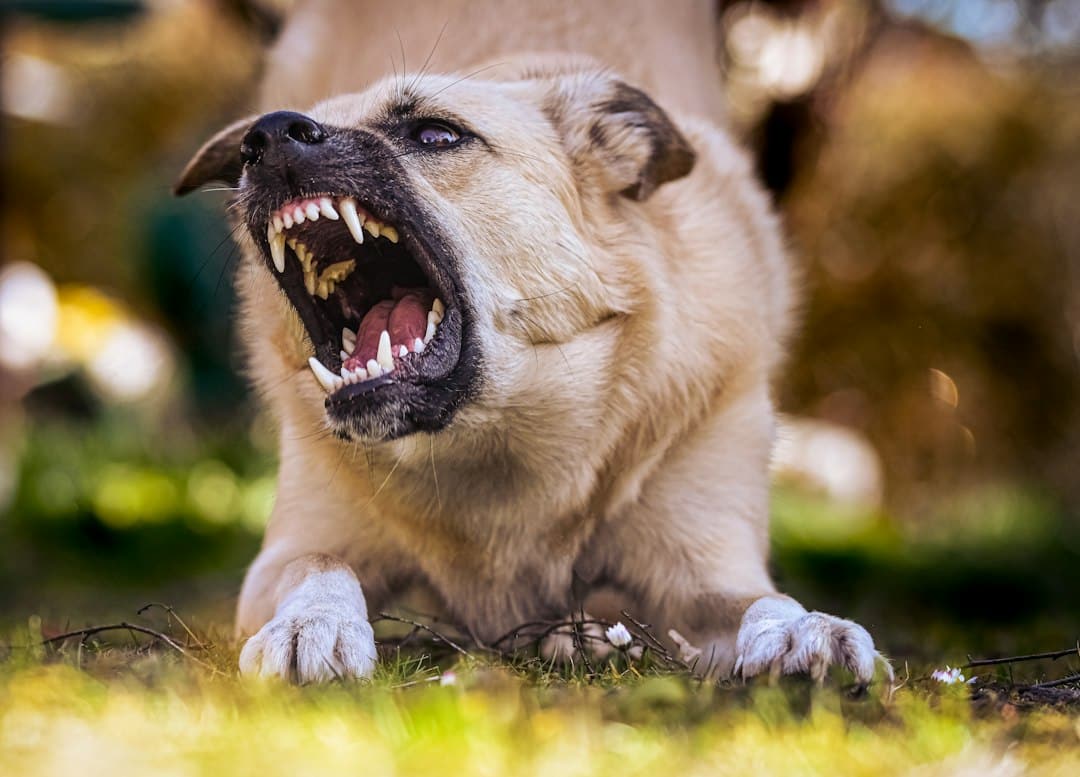
A reactive dog is one that overreacts to something in the environment usually with far more intensity than the situation calls for. Reactivity is a common behavior challenge, and when it shows up, you’ll know it. Signs include:
- Barking or growling
- Lunging toward the trigger
- Whining or yelping
- Pulling hard on the leash
- Intense staring or “locking on”
- Freezing in place
Here’s the part most people miss: not all reactive behavior comes from the same place. Understanding the why is the first step in any solid behavior modification plan.
- Fear based reactions happen when your dog feels threatened and wants the scary thing to go away.
- Frustration based reactions happen when your dog desperately wants to get to something and can’t.
- Excitement based reactions look chaotic, but your dog is honestly just thrilled and has absolutely zero chill.
Reactivity often stems from fear or anxiety, but it can also have roots in past trauma, a lack of early socialization, genetics, or a history of overexcitement and frustration on leash. Some dogs are simply wired to be more sensitive, and that’s not a character flaw it’s just information we use to build a better training plan.
Your dog’s body language almost always tells the story before the explosion happens. Learning to read those early staring and communication signals gives you a real head start and that head start is where meaningful change begins.
Why Does My Dog React to Other Dogs?
Reactivity rarely shows up out of nowhere. Your dog is responding to something specific a trigger. Common ones include:
- Other dogs
- Strangers
- Cars and bikes
- Loud noises
- Crowded environments
- Being approached while on leash
- Low light situations, like evening walks when things look and sound different
Identifying your dog’s specific triggers is crucial. The sooner you know what sets your dog off, the sooner you can stop accidentally putting them in situations that reinforce the reactive behavior. And while you’re working on a training plan, the smart move is to avoid those triggers as much as possible. Practicing reactive behavior makes it more ingrained not less.
Underneath those triggers, you’ll usually find fear, anxiety, frustration, or a simple lack of impulse control. Think of impulse control like a muscle some dogs come with a strong one, and others need to build it from scratch, and resources like the best dog training books for owners can help you understand how to strengthen that muscle over time.
Here’s the mindset shift I want you to take away: the goal isn’t just to stop the bad behavior. The goal is to teach your dog what to do instead. A dog who doesn’t know an alternative will always default to barking and lunging, because in their mind, it works.
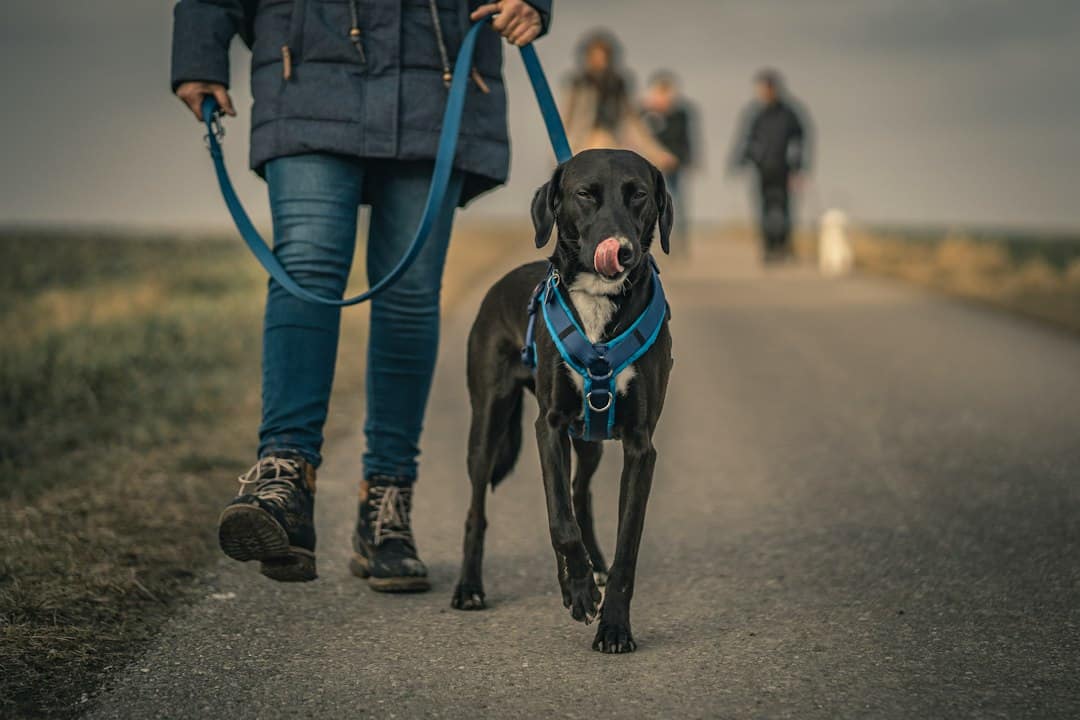
What Is Leash Reactivity?
On leash reactivity is one of the most frustrating versions of this problem, mostly because so many dogs behave completely differently off leash. Why? Because the leash changes everything.
When your dog is off leash and sees another dog, they have options. They can approach, sniff, circle, or walk away. On leash, those choices disappear. Your dog feels trapped, and that trapped feeling can turn ordinary nerves into a full meltdown.
Overexcitement and frustration on leash are just as real as fear-based reactions. Some dogs are crowded or amped up in tighter spaces, while others react more intensely at night when their senses are heightened and they feel less in control of their environment. Every dog is different, and leash reactivity training has to account for that.
Then there’s the classic “frustrated greeter” the dog who loves other dogs so much they lose their minds trying to say hello. They’re not aggressive. They’re just overexcited and blocked by the leash, and it comes out looking loud, dramatic, and a little embarrassing.
And here’s an important warning: dragging your dog directly into stressful situations to “get them used to it” often backfires. Flooding an anxious dog usually makes reactivity worse, not better. Distance is your friend more on that in a moment.
Reactive Dog Training: What Actually Helps?
I’ll be honest with you there’s no magic command that fixes reactivity overnight. Anyone promising that is selling you something. Effective reactive dog training is built on a real, individualized training plan that accounts for your dog’s triggers, history, environment, and personality.
Most reactive dogs show meaningful improvement within 4 to 8 weeks of consistent training but “consistent” is the key word. This isn’t a one-and-done deal. It’s a commitment. And the good news? The work pays off whether you’re training in Washington, DC or working with our professional dog trainer in Stafford, VA.
Here’s what I actually build into a solid reactive dog training plan:
- Foundation skills – the basics your dog needs to have something to focus on besides the trigger
- Impulse control – teaching your dog to pause and think instead of react
- Marker word training – a clear signal that says “yes, that’s exactly what I wanted”
- Rewarding good behavior – reinforcing the choices you want to see again and again
- Counter conditioning – changing how your dog feels about triggers at the emotional level
- Gradual exposure – working at a distance your dog can actually handle
- Calm behavior – making calm the easy, rewarding default
- Engagement and focus cues – teaching your dog to check in with you when distractions are nearby
- Management strategies – preventing your dog from practicing reactive behavior while training is underway
- Alternative behaviors – giving your dog clear, specific instructions for what to do in stressful moments
One thing I can’t stress enough: threshold distance matters. If your dog is reacting, you’re too close. Backing up until your dog can see the trigger without losing their mind is not “running away” it’s smart training. Keeping your dog under threshold is what allows them to think, learn, and actually absorb what you’re teaching.
I also keep sessions short. A five- to ten-minute focused session beats a forty-five-minute marathon that ends in an overaroused, mentally exhausted dog who can’t learn a thing. Short, successful reps build real skills.
Just as importantly, I practice in a real environment. Training that only works in your living room isn’t training it’s a party trick. We work where life actually happens so the skills transfer to everyday life.
What Dog Treats Are Best for Training?
Let’s talk snacks, because treats are one of your most powerful tools especially for reactive work. Using high value reinforcers when your dog is exposed to triggers significantly increases training effectiveness. The closer you are to something scary or exciting, the better that treat needs to be.
The best training treat is simply one your dog genuinely wants and can eat fast. A treat your dog has to chew for 20 seconds slows everything down, and if your dog is already stressed or whining from anxiety or frustration, that extra effort can make it even harder for them to focus.
For reactive work, you’ll want a mix:
- High value treats for stressful situations and tough triggers
- Lower value treats for easier practice at home or at a comfortable distance
Great high value options include:
- Small pieces of cooked chicken
- Turkey
- Cheese
- Freeze dried meat
- Soft commercial training treats
Keep the pieces tiny pea-sized or smaller. Reactive dog training involves a lot of repetitions, and you don’t want to fill your dog up or blow their diet in the first ten minutes.
One tip worth its weight in gold: if your dog won’t eat treats around a trigger, that’s valuable information. It usually means your dog is over threshold too stressed or aroused to function. Back up, create more distance, and try again somewhere your dog can actually think.
What Do Professional Dog Trainers Use as Treats?
People ask me about my “secret treat” all the time, but there isn’t one magic option. In reactive dog training, I choose rewards based on the individual dog, their motivation, and dog’s triggers. One dog may work for chicken, another for cheese, while some dogs prefer a toy, praise, or sniffing time.
For leash reactivity and on leash reactivity, I often use high value treats when another dog or trigger appears. If a reactive dog can eat treats and stay engaged, I can use positive reinforcement and counter conditioning to encourage calm behavior. If the dog won’t eat, the situation may be too stressful, and I need to create more distance.
Food is only one part of dog training. Marker word training, toys, praise, movement, and access to something the dog wants can also reinforce good choices. My goal is to understand dog’s body language, work at the dog’s own pace, and build skills that carry into everyday life.
Whether I’m working with puppies, adult dogs, frustrated greeters, or dogs with fear-based or frustration based reactivity, the reward should match what that dog needs to succeed. That is what practical, humane dog training looks like.
Should You Use Treats When Training a Dog?
Short answer? Yes when used well. Positive reinforcement training uses rewards to encourage the behaviors you want, and it’s one of the most effective ways to create lasting behavioral change. When done right, it clearly shows your dog which choices pay off and it helps them build a new emotional response to the things that used to set them off.
Now, I know the worry: “Won’t I just be rewarding bad behavior?” It’s a fair question, and the answer is no not if your timing is right. There’s a big difference between rewarding a calm response and accidentally reinforcing a reaction. Reward the moment your dog notices a trigger and stays calm. That’s exactly what you want more of.
What about punishment-based methods? I’ll be straightforward: aversive methods and punishment-based approaches can worsen fear and reactivity in dogs. A dog who is already anxious or fearful does not become calmer when pain or intimidation is added to the equation. It often makes things worse sometimes dramatically so.
My approach is to use training methods that prioritize safety, clear communication, and the individual dog’s needs. Not every tool works for every dog, but I’m not willing to risk making a fearful dog more fearful just to get a quick result. That’s not a result that’s a problem waiting to happen.
What Is the 7-7-7 Rule for Dogs?
You may have heard of the “7-7-7 rule” the idea of exposing puppies to 7 different surfaces, 7 different locations, and 7 different challenges within their first weeks of life. It’s a socialization guideline, not a scientifically established universal rule, but the principle behind it matters a lot.
A lack of early socialization is one of the key factors that increases the likelihood of reactivity later in life. Dogs who weren’t exposed to a variety of people, places, sounds, and situations as puppies often find the world more threatening as adults, which is why thoughtfully using spaces like indoor dog parks for controlled socialization can be so valuable when done at your dog’s pace.
But here’s the important nuance: every dog should progress at their own pace. Forcing a fearful or anxious dog through experiences before they’re ready doesn’t build confidence it builds avoidance and reactivity. This applies to puppies and adult dogs alike. Whether you’re working with a young pup or a five-year-old rescue with a complicated history, the goal is gradual, positive exposure that the dog can actually handle.
Counter Conditioning: Changing How Your Dog Feels
Counter conditioning is one of the most powerful tools in reactive dog training, and it’s worth understanding what it actually means. The goal isn’t just to stop the barking. The goal is to change how your dog feels about the trigger at an emotional level.
Here’s how it works in practice:
- The trigger appears in the distance.
- You maintain appropriate distance so your dog stays under threshold.
- Your dog notices the trigger.
- You immediately deliver a high-value treat.
- The trigger moves away or you move away before your dog gets overwhelmed.
Over time, your dog starts to associate the thing they used to hate with something they love. The trigger becomes a predictor of good things instead of a reason to panic. That shift in emotional response not just the suppression of the reaction is what leads to real, lasting behavioral change.
This is why reactive dog training focuses on changing emotional responses rather than just stopping reactions. Stopping the reaction without addressing the underlying emotion is like turning off the smoke alarm without putting out the fire.
Body Language: Catch the Reaction Before It Explodes
One of the most valuable skills you can develop as an owner is the ability to read your dog before the explosion happens. Dogs almost always give warning signs we just often miss them until it’s too late.
Watch for:
- Hard staring or “locking on” to the trigger
- Lip licking
- Yawning (when there’s no reason to be tired)
- Tensing of the body
- Ears shifting forward or pinning back
- Tail changes raised, stiff, or tucked
- Freezing
- Sudden increase in leash pressure
These are your dog’s early warning signals. When you recognize them, you have a window to intervene redirect your dog’s attention, add distance, use an engagement cue to get your dog to check in with you before things escalate. That window is where training actually happens.
Behavior Adjustment Training and Impulse Control
Behavior adjustment training is one approach that helps reactive dogs develop better coping skills over time. Rather than just managing the reaction, it gives dogs a way to make better choices when they encounter triggers, which is especially important for dogs who might otherwise escalate to biting out of fear or frustration.
Impulse control exercises are a big part of this. Teaching your dog to pause, look at you, and disengage from a trigger rather than lunge toward it is a skill that has to be practiced. It won’t happen automatically. But with consistent work, it becomes your dog’s default response instead of barking and lunging.
Rewarding dogs for disengaging from triggers and choosing calmer behaviors is the foundation of this work. And remember every small win counts. Your dog glancing at another dog and then looking back at you? That’s a win. Celebrate it.
The skills you build in training need to hold up in real life on a busy sidewalk, outside a coffee shop, or on a trail. That’s why I always practice in real environments, not controlled facilities where everything is perfectly staged.
Should a Reactive Dog Go to Group Training?
Group classes work well for some dogs and are completely wrong for others. Here’s how I think about it:
Group class might work if:
- Your dog’s reactivity is mild
- They can eat treats and function around other dogs at a distance
- They have no bite history
- They have some foundational training already
Private training is likely a better fit if:
- Your dog is highly reactive or has a bite history
- They can’t eat treats or focus near other dogs
- A group environment would put them or others at risk
- You need a fully customized plan built around your dog’s specific triggers
Forcing a reactive dog into a crowded group class before they’re ready isn’t exposure therapy it’s setting them up to practice the exact behavior you’re trying to change. That’s a step backward, not forward.
What If My Dog Has a Bite History?
Bite history should always be taken seriously. If your dog has bitten regardless of the circumstances that information needs to be shared with your trainer. All of it. I can only help you effectively if I have the full picture.
With a bite history, training shifts to include:
- Careful management to prevent future incidents
- Appropriate safety equipment
- A fully individualized behavior modification plan
- Honest conversations about risk and realistic outcomes
In some cases, involving a veterinary behaviorist alongside your trainer is the right call particularly when significant fear, aggression, or anxiety is involved, or if you’re dealing with a dog that has bitten their owner. There’s no shame in bringing in additional expertise. The goal is always the dog’s well-being and everyone’s safety.
What Not to Do With a Reactive Dog
This list matters just as much as everything above:
- Don’t force your dog to face their trigger head on. Flooding doesn’t fix fear it often deepens it.
- Don’t repeatedly put your dog in situations that overwhelm them. Every time they react, that behavior gets more practiced.
- Don’t punish warning signals. A dog who stops growling because you corrected them hasn’t stopped feeling threatened they’ve just lost their warning system.
- Don’t assume one technique works for every dog. What worked for your neighbor’s Lab may be completely wrong for your rescue.
- Don’t expect overnight results. Reactivity training often takes several months of consistent effort. That’s normal.
- Don’t compare your dog to other dogs. Your dog’s progress is the only progress that matters.
Consistency and appropriate practice matter far more than quick fixes. Set mini goals celebrate small wins and keep your eyes on the bigger picture.
My Approach to Reactive Dog Training at Ruff House
At Ruff House Dog Training, I combine structure, humor, communication, and practical techniques to help owners actually enjoy working with their dogs again. Here’s what that looks like:
- Customized training programs built around your dog’s specific triggers, history, and personality not a cookie-cutter template
- Real-world practice in the environments where your dog actually has to perform
- Humane dog training that prioritizes your dog’s emotional well-being alongside their behavior
- Clear expectations so you always know what you’re working toward
- Owner education so you understand why we’re doing what we’re doing
- Unlimited post-session support because life doesn’t stop between training appointments
For owners who need focused, immediate help, the 90-Minute Miracle is a great starting point. For dogs who need a more structured foundation covering leash manners, impulse control, and obedience the 6-Week Obedience Program builds real, lasting skills. And for more complex reactive cases, I design fully custom training programs tailored to your dog’s specific needs.
I also want to address owner stress directly: it’s real, and it matters. When you’re dreading every walk, your tension travels right down the leash. Building confidence through small, achievable goals and supplementing training with exercise and enrichment helps both you and your dog reset. You deserve to enjoy your dog. Let’s make that happen.
From Stressful Walks to Calm Behavior
Reactivity training takes time and consistency but progress is real, and it shows up in ways you might not expect at first.
Progress might look like:
- Your dog recovering faster after a reaction
- Noticing a trigger without reacting at all
- Looking back at you when another dog appears
- Walking past another dog at a greater distance without incident
- Choosing calm behavior where they previously couldn’t
Success doesn’t have to mean your dog loves every dog they meet. For many reactive dogs, success simply means being able to safely navigate the world to go for a walk without a crisis, to pass another dog without losing it completely. That’s a life changing outcome, and it’s absolutely achievable.
When Should You Work With a Dog Trainer?
If any of the following sound familiar, it’s time to get professional help:
- Your dog’s reactivity is getting worse, not better
- Walks have become something you avoid or dread
- Your dog lunges, snaps, or has bitten before
- You can’t redirect your dog once they’ve spotted a trigger
- You’re not sure what your dog’s body language is telling you
- You’ve tried training on your own and aren’t seeing progress
You don’t have to figure this out alone. And you don’t have to keep white-knuckling every walk.
Final Thoughts: You Don’t Have to Dread Every Walk
Having a reactive dog doesn’t make you a bad owner. It doesn’t mean your dog is hopeless. It means your dog is struggling with something they haven’t yet learned to handle and they need your help to get there.
Understanding dog reactivity, identifying your dog’s triggers, avoiding those triggers while you build a real training plan, and practicing the right skills consistently that’s the path forward. It’s not glamorous. It’s not instant. But it works, and along the way you’ll likely tackle everyday issues too, from house-soiling and getting rid of dog pee smell to teaching your dog to stay off the couch at home.
At Ruff House Dog Training, I don’t offer magic fixes or false guarantees. I offer honest, practical, judgment free support for real owners dealing with real dogs. No cookie-cutter programs. No quick gimmicks. Just tools, consistency, and a trainer who actually picks up the phone after your sessions end.