Let me guess. You love your dog, but somewhere between the morning commute, the school pickup line, and that 8 a.m. meeting, your pup has decided that barking at the mail carrier is a full time job. You’re not alone, and you’re not a bad dog parent. You’re just busy.
I’ve spent years helping dog owners across Arlington and the wider DMV area through Ruff House Dog Training turn chaos into calm, and here’s the truth I tell everyone: good dog training doesn’t mean chaining yourself to hours of drills every day. It means finding the right approach, and the right trainer, for your dog and your real life.
Training teaches dogs the manners you want and addresses problem behaviors before they spiral. It reduces boredom through mental stimulation, allows your dog to participate safely in more activities, and builds a positive bond between you two that makes everyday life genuinely more enjoyable. Dogs enjoy learning and when you give them the right outlet, destructive habits like chewing your furniture or barking at the window start to fade.
In this guide, I’ll walk you through exactly what to look for in a professional trainer, whether treats really work, what the 7-7-7 rule is all about, how group classes stack up against private lessons, and how to spend your training dollars wisely. My goal? To make training feel possible again, so you and your dog can actually enjoy each other’s company. Let’s dig in.
What Should You Look for in Professional Dog Trainers?
Choosing the right dog trainer can make dog training more effective and rewarding. Here’s what I recommend looking for:
- Proven experience: Choose a trainer experienced with different breeds, ages, puppies, rescues, and behavior challenges.
- Personalized training: Private lessons and private training should fit your dog, your handler skills, and your training goals.
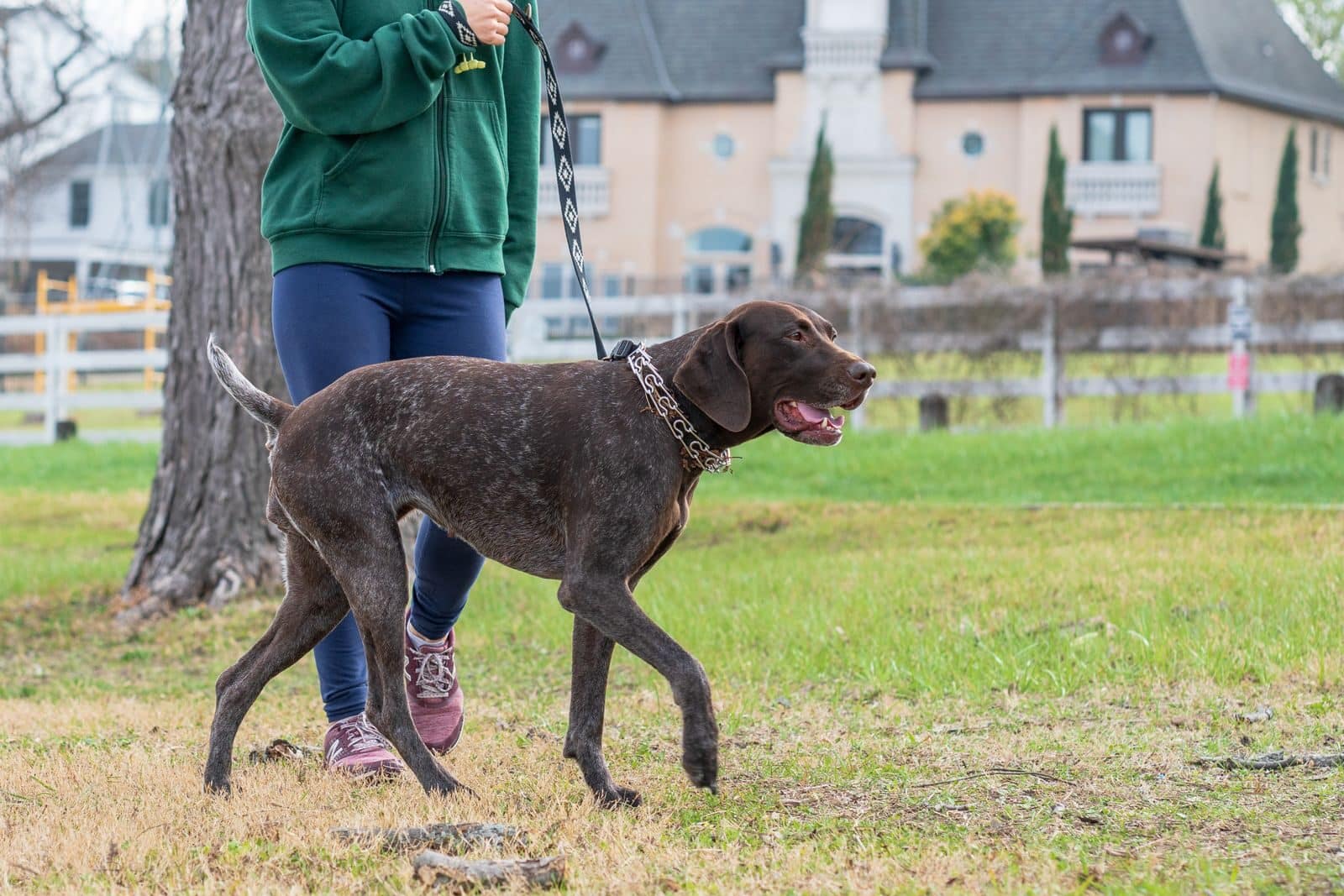
- Positive methods: Look for positive reinforcement, rewards, clicker training, and techniques that help dogs learn without unnecessarily relying on shock collars or prong collars.
- Real-world skills: Training should prepare your dog for leash walking, distractions, commands, socialization, and good behavior beyond the training session.
- Clear guidance: A good trainer helps you understand behavior, recognize stress or fear, and improve communication with your dog.
- Ongoing support: Whether you choose group classes, training classes, or private lessons, look for a trainer who provides practical tips and support between sessions.
The goal: Great dog training teaches more than a simple sit. It builds skills, confidence, trust, and a stronger relationship between you and your dog.
Why Local Experience Matters in Arlington
Arlington is a wonderful, busy place, and that comes with a unique set of distractions for your dog. Think crowded sidewalks, dog packed parks, apartment hallways, traffic noise, delivery trucks, and neighbors walking their own pups at every turn.
A dog who behaves perfectly in a quiet living room hasn’t actually learned much if they fall apart the moment a squirrel darts across the trail. That’s why I always start training in a calm room with zero distractions. Once a dog understands what’s being asked, we gradually introduce the real-world chaos of Arlington life.
Local experience means a trainer knows the specific challenges your neighborhood throws at you. We practice around realistic distractions on purpose, so your dog builds focus where it counts right outside your front door.
Should You Use Treats When Training a Dog?
Short answer: yes. Treats are one of the most useful tools you have, as long as you use them well.
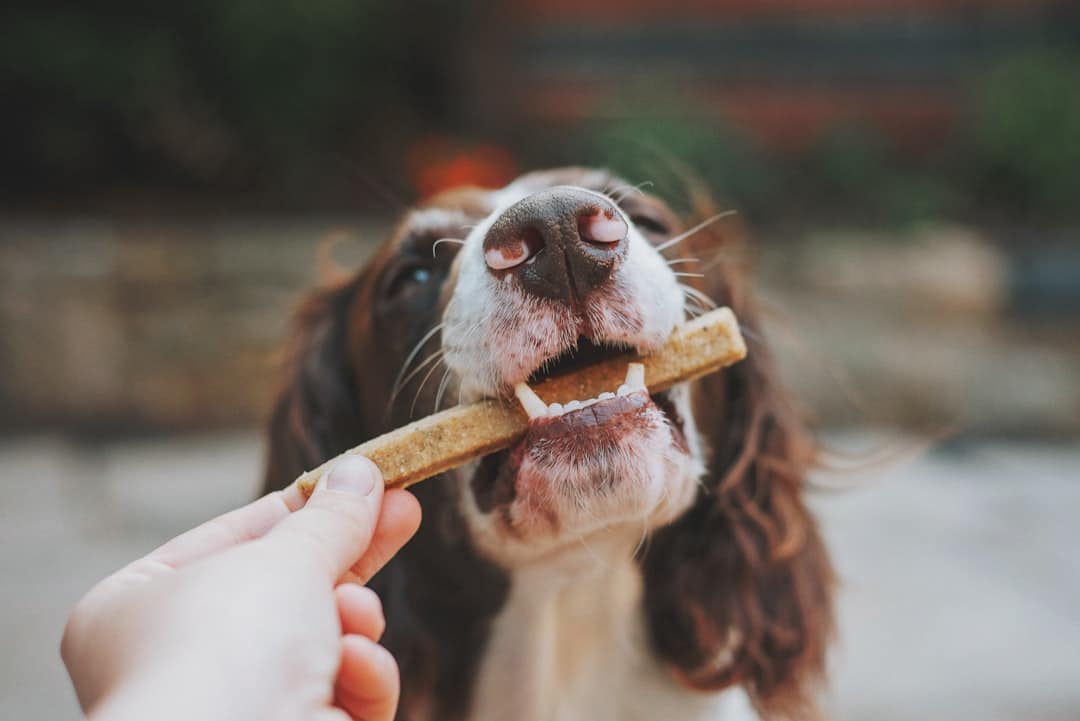
Here’s how I look at it. Treats aren’t bribery. They’re communication. A well timed treat tells your dog, “Yes! That’s exactly what I wanted.” It’s a clear, honest way to reinforce the good behavior you want to see again. This is the core of positive reinforcement training rewards encourage desired behavior, and dogs learn to repeat what earns them good things.
To use treats the right way, keep these principles in mind:
- Lean on positive reinforcement. Reward the behavior you want, and you’ll get more of it.
- Nail your timing. The treat should come the instant your dog does the right thing, not five seconds later when they’ve already moved on.
- Use small treats. Tiny, pea sized pieces keep your dog engaged without filling them up.
- Pair food with praise. Add a happy “good boy” and a scratch behind the ears so the reward isn’t only about food.
- Fade the food gradually. As behaviors become reliable, you’ll reward less often and rely more on praise and life rewards.
- Keep sessions short to maintain focus. A few focused minutes beats a long, boring slog every time.
Always end on a positive note. Finish each session with a simple command your dog knows well let them succeed before you wrap up.
- Use the same words and signals every time. Consistency is everything. Saying “down” one day and “lie down” the next confuses your dog and slows progress.
Micro-summary: treats work beautifully when they’re small, well-timed, and eventually phased down. They’re a bridge to communication, not a permanent crutch.
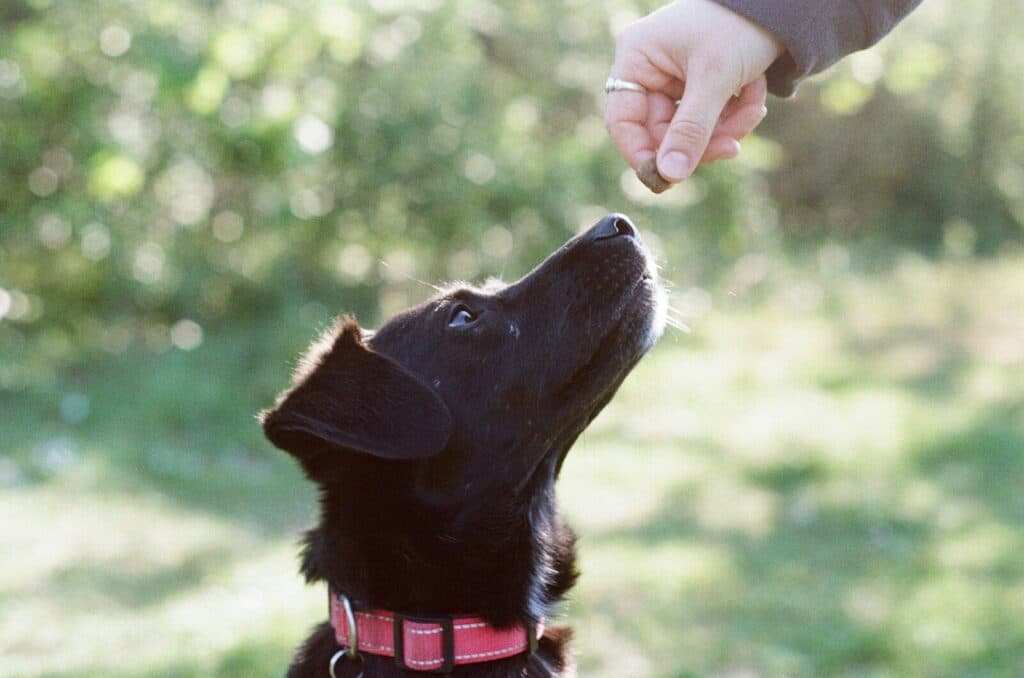
Photo by Charlie Harland on Unsplash
What Dog Treats Are Best for Training?
The honest answer is that the “best” treat depends on your individual dog. That said, when I pick training treats, I look for a few key qualities:
- Small and easy to chew so your dog can gobble it and get right back to work
- High value enough to hold focus, especially around tempting distractions
- Easy to break into tiny pieces
- Not too messy because nobody wants greasy pockets
- Appropriate for your dog’s diet and any health needs
- Genuinely rewarding in your dog’s opinion, not just yours
One dog goes wild for a bit of plain chicken. Another turns up their nose at everything except cheese. Pay attention to what your dog finds exciting, and you’ve found your winning treat.
What Do Professional Dog Trainers Use as Treats?
People often assume professional dog trainers reach for some fancy, expensive treat. Not really. Here’s what commonly ends up in my treat pouch:
- Small commercial training treats made for quick rewards
- Soft treats that dogs can swallow fast without crunching for ages
- Tiny pieces of cooked meat, like plain chicken or turkey
- Kibble for dogs who are highly food motivated
- Higher value treats saved for the tough moments, like working near heavy distractions
The secret isn’t the price tag. It’s the message. I just need a reward that clearly tells my dog, “Yep, that’s exactly what I wanted you to do.” A dog who understands that is a dog who learns fast.
The Science Behind How Dogs Learn
Understanding a little training science goes a long way. You don’t need a degree to use these concepts you just need to know they’re working in the background every time you train.
Operant conditioning is what’s happening when your dog learns that sitting calmly earns a treat and jumping earns nothing. Behavior is shaped by its consequences. Do something that works? Do it again. Do something that doesn’t? Eventually, stop.
Classical conditioning is a bit different. It’s about associations. Your dog hears the leash clip and gets excited because walks have always been great. Over time, stimuli become connected to specific outcomes positive or negative. A good trainer uses this intentionally.
Model-rival training is another approach worth knowing about. It works by using a rival often another person or dog to demonstrate a desired behavior, motivating your dog to perform it too in order to earn the reward. It’s particularly effective for dogs who are highly socially motivated.
None of these are complicated in practice. They’re just the framework behind what good training already looks like when it’s done well.
Clicker Training: When Does It Help?
You’ve probably heard about clicker training and wondered if you need one of those little plastic gadgets. Let me break it down simply.
Clicker training is a form of positive reinforcement training. A clicker makes a distinct sound the exact moment your dog performs the desired behavior. You click, then you reward. Over time, that click becomes a crystal clear “yes” your dog understands instantly.
Here’s why it can help:
- The click marks the precise moment of good behavior.
- It follows with a reward, cementing the connection.
- It can sharpen your timing and clarity as a handler.
But here’s the part some trainers won’t tell you: clickers aren’t mandatory. Plenty of dogs learn beautifully with a simple marker word like “yes.” What matters most is consistent communication between you and your dog.
For busy owners, this is good news. The tool matters far less than having a clear, simple system you’ll actually stick with day to day.
Redirecting and Interrupting Unwanted Behavior
Here are a few practical strategies I rely on that make a real difference at home:
Interrupt inappropriate behavior with a neutral sound. Not a shout, not a sharp “no” just a calm, neutral sound like a clap or a tongue click that breaks your dog’s focus without adding to their excitement or anxiety. Follow the interruption by redirecting to what you do want.
Provide approved chew toys to redirect destructive chewing. If your dog is going after your shoes or furniture, they’re not being spiteful they’re bored or teething. Give them something appropriate to chew on, and praise them when they use it; if you’re also struggling with furniture battles, strategies for keeping your dog off the couch can help protect your space.
Never punish a dog showing fear or growling. This one is important. Growling is communication. A dog who growls when uncomfortable is telling you something, and understanding why dogs might bite or show aggression is key to keeping everyone safe. Punishing that signal doesn’t fix the fear it just removes the warning, which can make a dog more dangerous. Instead, work on what’s causing the fear.
Use systematic desensitization to help a fearful dog. This means gradually and carefully exposing a dog to the thing they fear, starting at a very low level of intensity, and pairing each exposure with something positive. Over time, the fear response fades. It takes patience, but it works, and in more serious cases of dogs that bite their owners, working closely with a professional is essential.
What Is the 7-7-7 Rule for Dogs?
The 7-7-7 rule is a popular guideline for socialization, especially with a new puppy. The idea is to expose your dog to a variety of experiences early on things like different surfaces, objects, locations, people, and situations to build confidence and adaptability.
Now let me be honest with you: 7-7-7 isn’t a magic scientific formula. Hitting a certain number won’t automatically produce a perfectly socialized dog. It’s a helpful framework, not a guarantee.
The bigger principle behind it is what really counts:
- Controlled exposure to new things, one step at a time
- Appropriate socialization matched to your dog’s comfort level
- Positive experiences so new equals good, not scary
- Gradual increases in difficulty as your dog gains confidence
- Watching body language for signs of stress
- Never overwhelming your dog with too much, too fast
Micro summary: use the 7-7-7 rule as inspiration for thoughtful socialization, but always let your dog’s comfort set the pace. For dogs who need safe, structured practice around new people and pups, indoor dog parks and training partnerships can also be a great controlled environment.
Group Classes vs. Private Lessons: Which Is Better?
This is one of the most common questions I hear, and the answer depends on your dog, their history, and your goals. Let me break down how each one works and who it’s right for.
How Group Training Classes Are Structured
Most group training classes run for 6 weeks and meet once a week. Here’s how the levels typically break down:
- Puppy classes can start as early as 10 weeks old which is earlier than most owners realize. Early socialization and basic manners during that critical window make a huge difference.
- Beginner classes are designed for dogs 5 months and older who are just starting out.
- Intermediate classes build on what was learned in Puppy or Beginner programs.
- Advanced classes strengthen reliability and introduce more complex skills.
- The Canine Good Citizen (CGC) program, developed by the AKC in 1989, is a well-recognized benchmark for well mannered dogs and a natural goal for many owners completing advanced training.
When Group Classes Make Sense
Group training classes shine when you want your dog to practice around other dogs and people, whether you’re in Arlington or looking at professional dog training in nearby Stafford, VA. They’re great for:
- Building focus around real, live distractions
- Practicing foundational skills in a structured setting
- Owners who enjoy a social, community style learning environment
- Getting comfortable in a busy group setting
When Private Lessons Make Sense
Private lessons give you focused, one-on-one attention and allow for personalized training plans built around your specific dog and household. They’re a better fit when:
- You need individualized help for your specific challenges
- You’re tackling leash issues, reactivity, aggression, jumping, or barking
- You want training built around your home, schedule, and lifestyle
- Your dog is very fearful or struggles in crowded environments and needs a calmer start
- You have a busy schedule and need the flexibility of appointments that work around your life
On average, one hour private training sessions typically cost around $90, though pricing varies based on location, trainer experience, and program length.
For many busy Arlington families, private lessons win simply because the training comes to you and targets your exact challenges. Pairing hands on coaching with the best dog training books for at home practice can make your work between sessions even more effective. But there’s no single right answer just the right fit for your dog.
When Advanced Training or Custom Training Makes More Sense
Some dogs need more than the basics, and that’s completely okay. If your dog is dealing with any of the following, a custom or advanced plan usually beats a standard group course:
- Reactivity toward people or other dogs
- Fear or deep rooted anxiety
- Aggression
- Severe leash problems
- Several behavior concerns stacked together
- A complex household situation, like multiple dogs clashing
The best program matches the dog in front of you. I don’t believe in forcing every dog into the same rigid course. Your dog’s plan should fit your dog.
Positive Reinforcement vs. Shock Collars and Prong Collars
Training tools spark a lot of heated debate online, so let me keep this practical rather than preachy.
Positive reinforcement training simply means rewarding the behavior you want so your dog chooses to repeat it. It builds trust, and it builds a dog who wants to work with you. This is the foundation of everything I do.
Here’s the thing I really want you to hear: no piece of equipment replaces knowledge. Timing, consistency, and clear communication matter far more than whatever you clip onto your dog. A tool in untrained hands rarely fixes anything.
Tools like shock collars and prong collars are controversial for good reason, and they should never stand in for proper training understanding. If you ever consider any tool, you should fully understand how it works, why you’re using it, and whether it truly fits your individual dog first.
There are gentler alternatives worth knowing about too. A well fitted head halter, for example, can give owners better control on walks for the right dog, without harsh corrections. The proper leash and setup often make a bigger difference than people expect.
At Ruff House, I stay focused on practical, humane, behavior-first solutions. The goal is a dog who listens because they understand you not because they’re afraid.
What Should a Good Dog Training Program Teach?
A quality program goes way beyond a party trick sit. Training should teach dogs the manners you want and address problem behaviors that are making life harder. It should also provide mental stimulation that reduces boredom and opens the door to activities your dog couldn’t safely join before, and help you better read subtle communication like why your dog might stare at you.
When I work with a dog, I want to build a solid foundation that includes:
- Sit
- Down
- Stay
- Recall (coming when called, even when distracted)
- Leash walking without the constant pulling
- Place (settling calmly on a bed or mat)
- Impulse control
- Focus on you when it matters
- Appropriate greetings instead of jumping on guests
- Leave it
- Reliable responses around distractions
But here’s the real goal: helping those skills transfer into everyday life. A stay that only works in the kitchen isn’t much use when the doorbell rings. I train for the moments that actually matter walks, guests, dinnertime chaos, and everything in between.
How Much Does Dog Training Cost?
Cost is a fair question, and the honest answer is that dog training prices vary based on several factors:
- Private vs. group training
- Number of sessions you need
- Behavior complexity (basic manners cost less than serious behavior work)
- Trainer experience
- Program length
- Location
- Level of customization
As a general benchmark, one-hour private sessions typically run around $90. Group classes are often more affordable per session but cover a broader range of dogs and goals. Even a single well structured session can save you money and frustration on issues like house soiling and getting rid of lingering dog pee smell.
At Ruff House, I keep things flexible so you can choose what fits your dog and your budget. The 90-Minute Miracle is a focused, jump-start session for quick, actionable improvement. The 6-Week Obedience program builds lasting routines for common issues like house-soiling, chewing, puppy biting, barking, and excessive whining or vocalizing. And for tougher situations, custom training is built entirely around your dog.
Ready to figure out which option fits? Schedule Your 90 Minute Miracle Now at ruffhdt.com.
Why I Take a Real World Approach to Dog Training
Let me be straight with you: I don’t expect you to live in a training facility. You have a job, maybe kids, a commute, and about a thousand other things pulling at your attention.
That’s exactly why I train for real life. I want your dog to behave at home, on walks, around guests, and in the everyday moments that used to feel stressful. My whole focus is on improving communication between you and your dog because when you two understand each other, good behavior follows naturally.
I use a mix of structure, humor, empathy, and proven techniques. That means identifying behavioral triggers, using consistent cues, applying the right training science, and setting your dog up to succeed not just in a session, but at 7 a.m. when you’re rushing out the door. What I don’t do is make unrealistic promises or wave a magic wand. Training is a bit like going to the gym: you get out what you put in. But you won’t do it alone.
More than 400 happy clients across the DMV have gone through this process with me, and they’ll tell you the same thing: it works when you stay consistent, and I’m right there with you. I even offer unlimited post session support, so when a question pops up weeks later, you can just call. Try finding that at a big franchise.
How I Help Busy Arlington Dog Owners
I know your time is precious, so my approach is built around your reality, not against it. Here’s what that looks like:
- Efficient, short training sessions that respect your schedule and keep your dog focused
- Flexible programs to match your dog and your life
- Practical homework you can fold into your existing routine walks, meals, and daily moments
- Personalized guidance for your specific challenges
- Ongoing support after sessions end
- Solutions designed for busy households
- Private lessons that can be scheduled around you, because your time matters
Here’s the mindset shift I want to leave you with: you don’t need to become a professional dog handler. You just need to become a better communicator with your dog. Training enhances that communication and builds a bond that makes every day a little easier and a lot more fun. That’s a goal any busy owner can reach and it changes everything.
Final Thoughts: The Right Trainer Makes Training Feel Possible
Every dog is different. Every household has its own beautiful brand of chaos. And here’s the reassuring part you don’t need overnight perfection to see real change.
The goal isn’t a robot dog. The goal is steady progress, better communication, and a calmer, happier relationship with the pup you love. Dogs enjoy learning, and when you give them the structure and mental stimulation they need, the destructive behaviors and boredom fade on their own. Choosing the right dog trainers can make that whole journey feel a whole lot more manageable and a lot more fun.
So if you’re tired of the barking, the pulling, and the stress, let’s fix it together. Because your dog won’t train himself.
From chaos to calm, let’s do this. Head to ruffhdt.com to Book Your Training Session Today or Download Your Free Behavior Guide and start transforming your dog’s behavior right now.