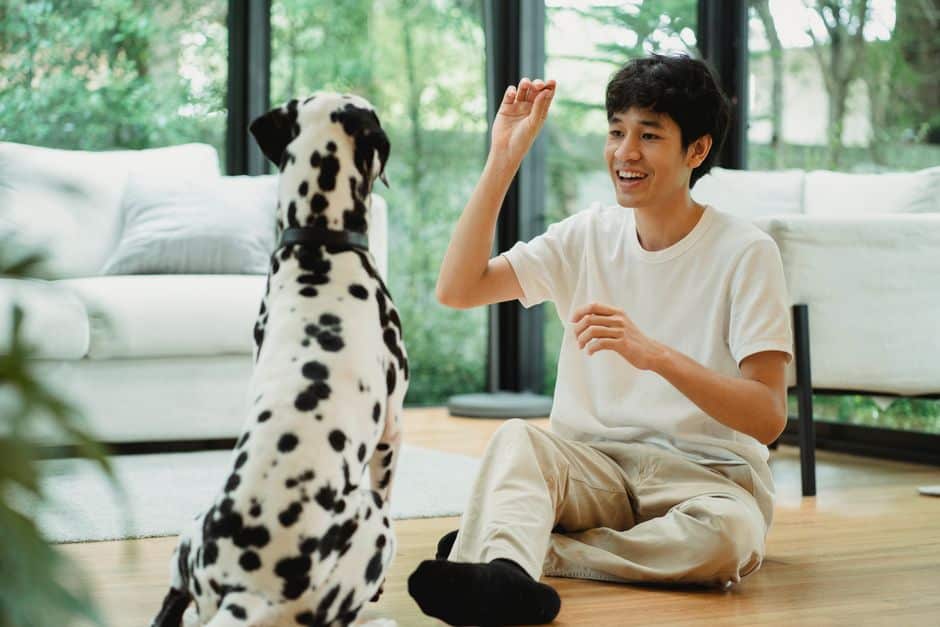
Here’s the truth I share with every family I work with: a calm, well mannered dog doesn’t happen by accident. Great behavior is built, not born. And no, your dog didn’t come with a factory setting for “walks politely past the neighbor’s poodle without losing his mind.”
Good dog obedience training goes way beyond getting a dog to sit or stay. It’s about communication, safety, confidence, and building a calmer, happier relationship between you and your pup. Whether you’ve got a brand new puppy, a stubborn adult dog, or a leash puller who thinks every walk is the Iditarod, training should fit your real life not some rigid, one size fits all script.
At Ruff House Dog Training, I bring structure, humor, consistency, and individualized guidance to families across Potomac and the greater DMV area. In this guide, I’ll walk you through the basics of effective obedience training, answer the treat questions I get asked constantly, and explain what it actually takes to build a dog you can trust. Let’s dig in.
Why Dog Obedience Training Matters at Home and in Public
Obedience training gives your dog foundational skills they can use every single day. When your dog understands basic commands sit, stay, heel, come, leave it, and watch you’re building a shared language. And a dog who understands you is a dog who’s far easier to live with.
Think about all the moments where appropriate behavior really counts:
- Walks around the neighborhood without your arm getting yanked out of its socket
- Visits with family and friends who’d rather not be jumped on
- Trips to public spaces like patios, parks, and pet friendly shops
- Time around children who deserve a calm, predictable dog and an understanding of why dogs may bite and how to prevent it
- Veterinary visits that don’t require three staff members and a prayer
- New or distracting environments where your dog needs to stay focused on you, including stimulating places like indoor dog parks for socialization and training
Here’s something I want you to hear: the goal isn’t a “perfect” dog. Perfect doesn’t exist. Dogs are living creatures with opinions, quirks, and the occasional questionable decision. The goal is giving you and your dog better tools to handle real situations.
Training should also be a proactive process not just a reaction to mistakes. Waiting until your dog has already developed a bad habit makes things harder for everyone. The earlier you start building the right communication, the better.
And those tools only work if you use them. Consistency and practice outside our formal sessions are what turn one good lesson into lasting change. Obedience training builds the everyday communication that makes life with your dog easier, safer, and a whole lot more fun.
What Dog Treats Are Best for Training?
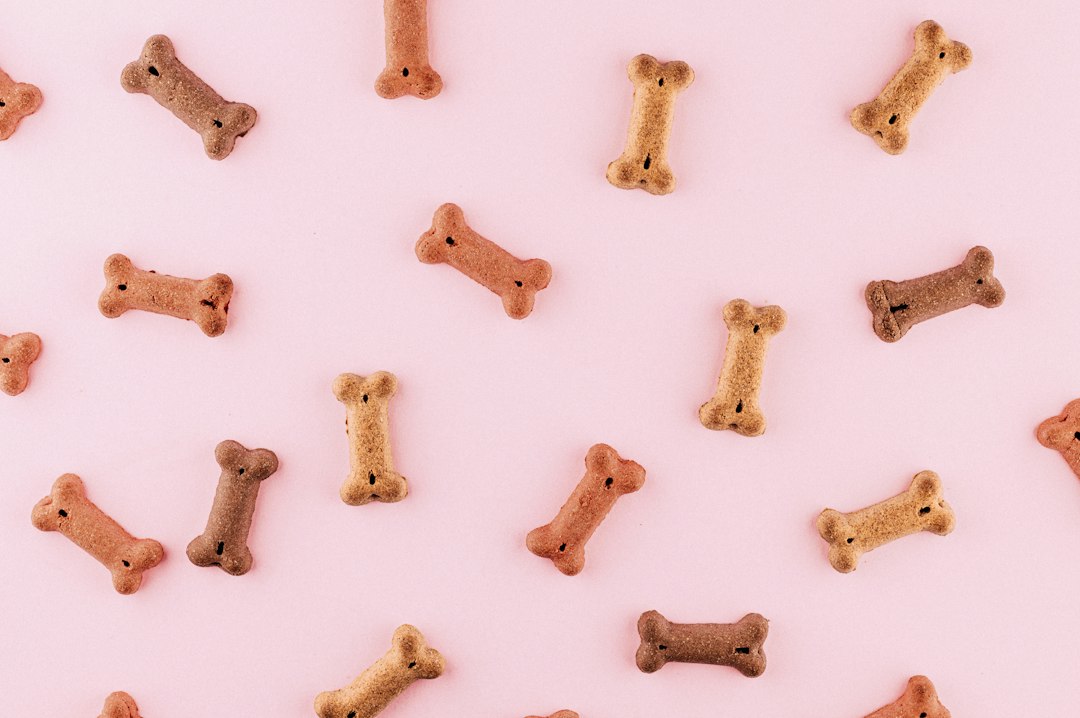
Let me ease your mind right away: the best training treat isn’t the fanciest or most expensive one on the shelf. Your dog doesn’t care about gourmet packaging. What matters is whether the treat motivates your dog.
When choosing training treats, look for options that are:
- Small (think pea sized, not palm sized)
- Soft or easy to chew so there’s no lengthy crunching break
- Highly motivating for your specific dog
- Easy to break into smaller pieces
- Appropriate for your dog’s size and dietary needs
Why so tiny? Because training moves fast especially when you’re keeping sessions short, which is exactly what you should be doing. Short, frequent training sessions are far more effective than long, draining ones. Your dog’s focus has a limit, and tiny treats help you squeeze in more reps before that limit hits.
Using high value rewards is especially important when distractions increase or when you’re asking for a harder behavior. A dry biscuit might work in your quiet kitchen, but the second another dog walks by? You’ll want the good stuff soft, smelly rewards that say “this is absolutely worth your attention.”
One practical reminder: count training treats as part of your dog’s daily food intake. Little bites add up, and we want a healthy, fit pup.
Ruff House tip: if your dog will work for plain kibble in a calm environment, that’s a perfectly solid everyday training option. Save the premium treats for tougher moments.
What Do Professional Dog Trainers Use as Treats?
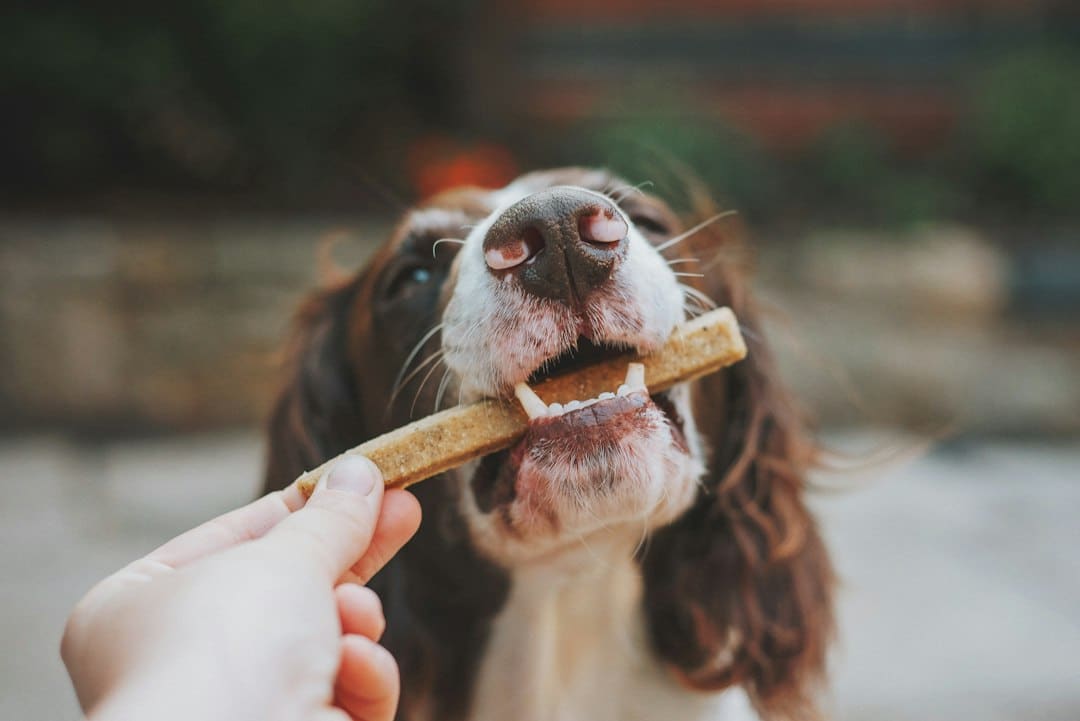
People often assume professional dog trainers have some secret magic treat. Honestly? We use whatever motivates the individual dog in front of us. That’s the whole trick.
The right reward shifts depending on:
- The environment you’re training in
- The difficulty of the behavior you’re asking for
- The distractions competing for your dog’s attention
- Your dog’s motivation on that particular day
- Your overall training goals
In practice, that might mean small commercial training treats, plain kibble, a bit of cooked meat, or another dog-safe reward your pup goes crazy for. When the challenge goes up, so does the reward value.
Positive reinforcement rewarding the behavior you want is the most effective method for dog obedience training, and it’s what I rely on. Reward based methods build real behavior change without the fallout that often comes from aversive techniques. They also build something just as important: mutual trust between you and your dog.
One key detail that many owners overlook: reward good behavior immediately. Dogs connect actions to outcomes in real time. If there’s a delay, the connection is lost. Timing matters just as much as the treat itself.
But here’s what I always remind my clients: the goal is never to bribe your dog forever. Rewards are a teaching tool. Over time, your dog learns the behavior, and the treats gradually become less constant. The treat starts the habit communication maintains it.
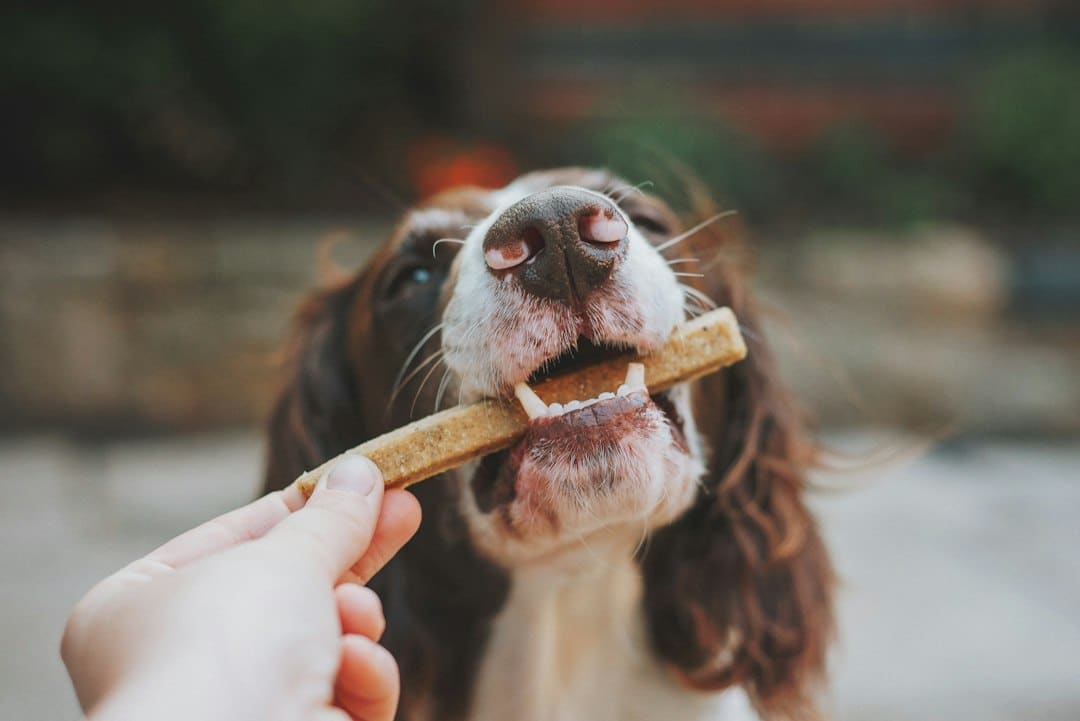
Should You Use Treats When Training a Dog?
Yes treats can be an incredibly useful part of dog training when you use them thoughtfully. The key word there is thoughtfully.
There’s a big difference between rewarding a behavior and simply waving food around to get your dog to follow your hand like a furry little magnet. Luring can be helpful early on, but if you never move past it, your dog learns to respond only when food is visible. That’s not the reliability you’re after.
Instead, we gradually build your dog’s ability to respond to a command without seeing a treat first. Dogs also learn best in a distraction free environment to start a quiet room at home, for example before you introduce more challenging settings. Over time, rewards can become more varied:
- Praise and an enthusiastic tone of voice
- Play and a quick game with their favorite toy
- Toys your dog loves
- Access to something they want (like heading out the front door)
- Life rewards woven into everyday moments
Food is a tool, not the entire program. Used well, it helps your dog learn faster and enjoy the process and that’s a win for both of you.
What Is the 7-7-7 Rule for Dogs?
The 7-7-7 rule is a socialization framework some folks use to encourage puppies to experience a variety of people, places, and situations early in life. The idea is to expose your pup to a range of sights, sounds, surfaces, and experiences during their formative weeks.
But here’s where I gently push back: socialization is not about cramming in as many experiences as humanly possible. More is not always better. Overwhelming a puppy can backfire and create fear rather than confidence.
What actually matters is controlled, positive experiences that let your puppy process new situations at their own pace. A calm, confident introduction to one new thing beats a chaotic parade of ten. Confidence and communication will always matter more than checking boxes on a list.
Before introducing new experiences, consider your dog’s:
- Age and developmental stage
- Vaccination status (talk to your vet before public outings)
- Temperament and comfort level
- Individual ability to handle new things
Done right, early socialization sets the foundation for appropriate behavior, real confidence, and everyday safety, and it also helps you understand subtle communication signals like why your dog might stare at you or others. Which brings me to the next logical question:
When Should You Start Training Your Dog?
The short answer? As soon as possible. Puppy training can begin as early as 10 weeks old. Young puppies are sponges, and starting early means you’re building good habits before bad ones have a chance to take root.
For puppies, early training should focus on:
- Name recognition so they know when you’re talking to them
- Potty training to establish good bathroom habits right away
- Bite inhibition to prevent those sharp little teeth from becoming a problem
- Basic commands like sit, stay, and leave it
- Leash skills to make walks enjoyable from day one
- Calm behavior around people, kids, and other animals, even when they express themselves with behaviors like whining driven by stress or attention-seeking
- Handling and grooming so vet visits and baths don’t become battles, and clear household boundaries like teaching your dog to stay off the couch
For adult dogs, training is still absolutely worth it. Dogs can learn new skills and change established habits at any age. The process may look a little different, but the principles are the same: clear communication, consistency, and positive reinforcement.
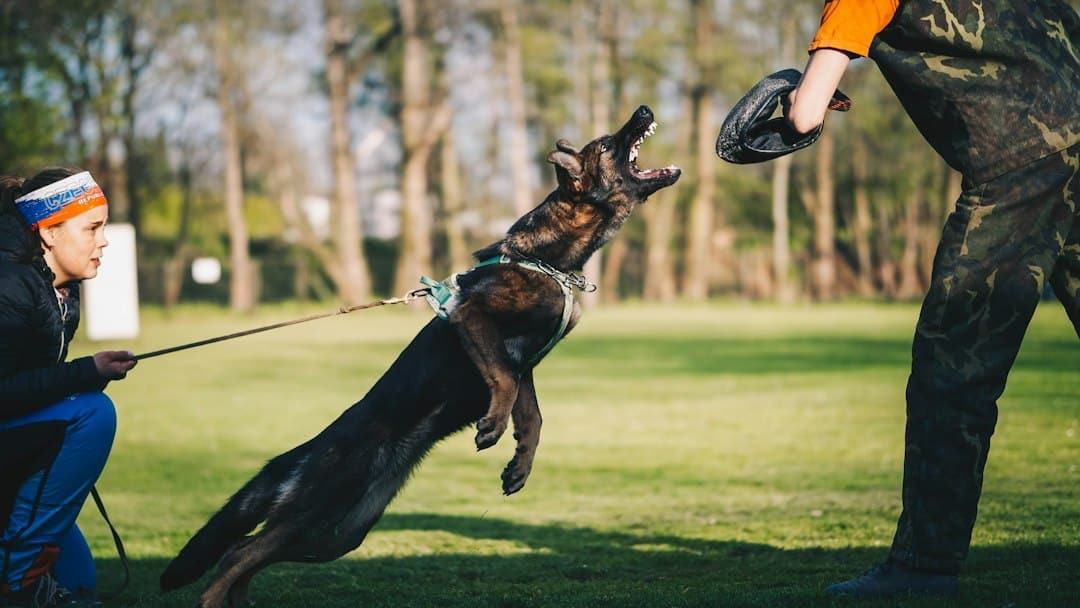
And for serious behavioral issues aggression, reactivity, severe anxiety please don’t wait and hope it resolves on its own. Seeking professional help early makes a real difference. The longer a problem behavior goes unaddressed, the harder it becomes to change.
Dog Training Classes vs. Private Training: Which Fits Your Dog?
One of the most common questions I get is whether group classes or private sessions are the better choice. The honest answer: it depends on your dog, your goals, and your situation.
Training Classes
Group obedience classes are a great way to build foundational skills in a structured setting. They typically run six weeks, meeting once a week, and give owners a consistent framework for practicing at home between sessions.
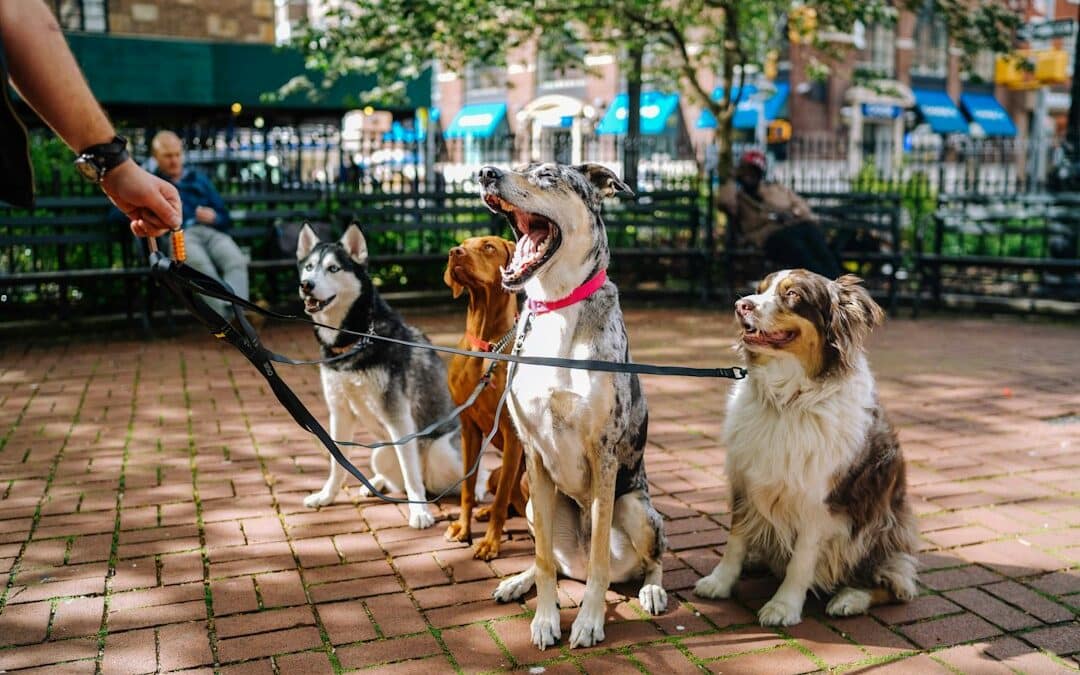
The benefits go beyond commands. Group classes allow dogs to learn in a judgment free environment alongside other dogs which is valuable real-world exposure in itself. They provide mental stimulation that reduces boredom related behaviors, improve communication between dogs and their owners, and help reduce problem behaviors over time. Dogs who complete group training often find themselves able to participate in more activities and outings with their families because their behavior is more reliable.
That said, group classes aren’t the right fit for every dog or every challenge.
Private Training
One-on-one sessions are designed to target the specific needs of your dog and household. If your dog has leash reactivity, aggression toward other dogs or people, separation anxiety, or any complex behavioral challenge, private training allows us to address that directly without putting your dog (or others) in a stressful situation.
Private sessions let me see exactly what’s happening in your dog’s environment and tailor the guidance accordingly. I can observe your dog’s triggers up close, adjust the approach in real time, and give you tools that actually fit your daily life.
For dogs with serious behavioral problems, private training or a board and train program lasting 2–4 weeks for more intensive intervention is often the most effective path forward.
Choosing the Right Pace
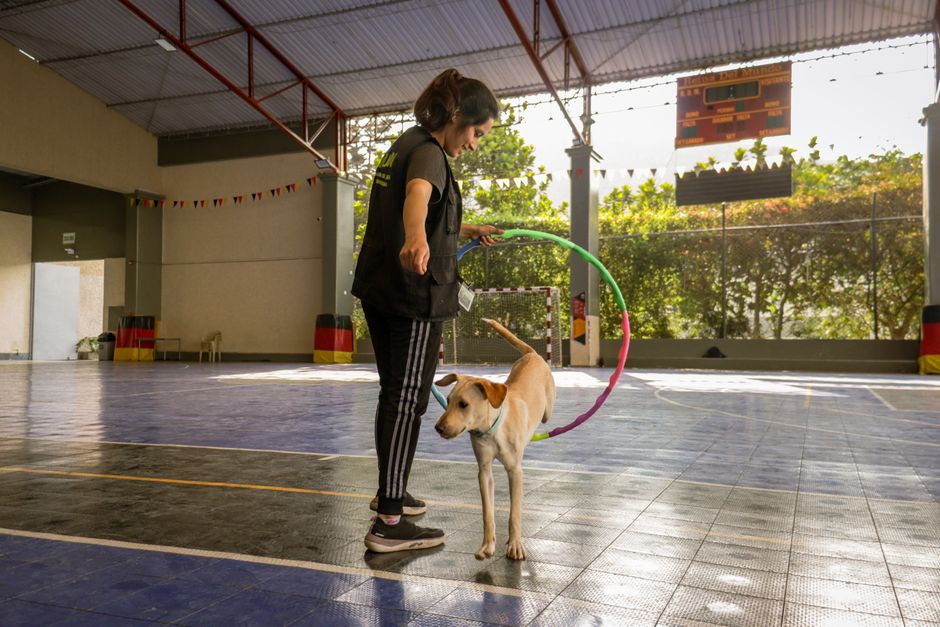
Not every dog or family needs the same schedule. What matters is creating a training plan you can realistically maintain, supported by resources like well-chosen dog training books to reinforce your learning. Consistency between sessions even in short five to ten minute daily practice bursts is what drives real progress.
Building Basic Obedience Before Advanced Skills
Before you can expect your dog to perform reliably in the real world, you need a solid foundation. Basic obedience includes commands like sit, down, and leave it, and these aren’t just tricks they’re the building blocks of everything else.
Here’s a closer look at why each foundational command matters:
- Sit is one of the most frequently used commands in training. It’s versatile, easy to teach, and creates a go to default behavior in countless everyday situations.
- Stay is critical for controlling your dog’s position and keeping them safe whether you’re answering the door, crossing a street, or asking them to hold still while guests arrive.
- Recall (come) is arguably the most important safety command your dog can learn. A reliable recall can prevent accidents and give your dog more freedom because you know they’ll come back when called.
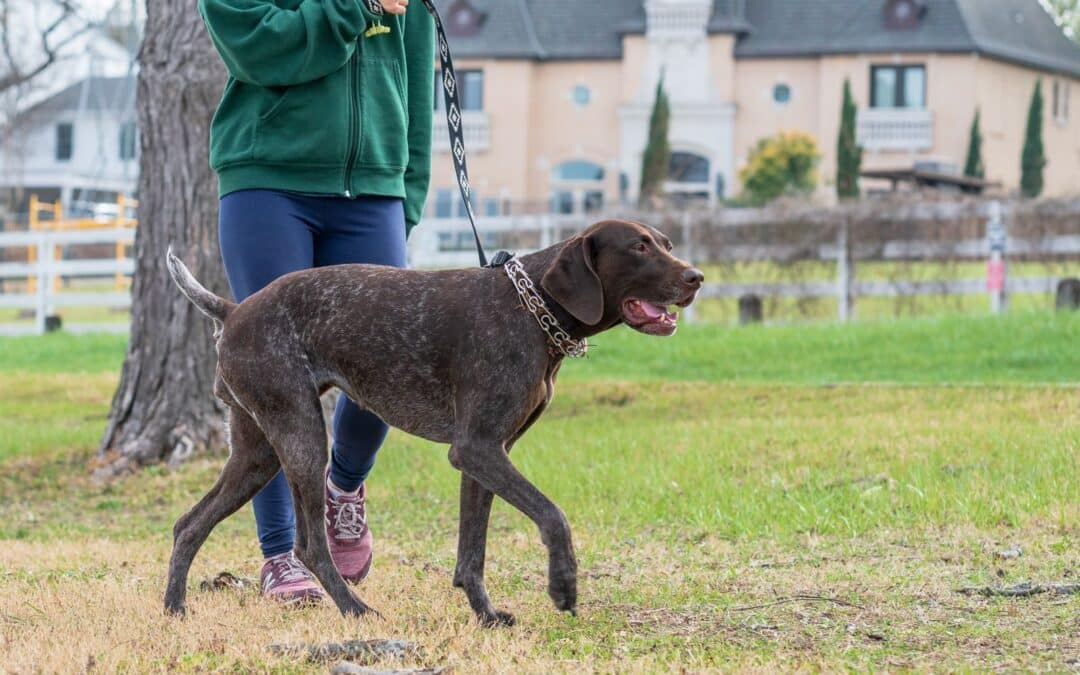
- Heel establishes your dog’s position right next to you and builds a strong, attentive connection between dog and handler essential for calm, enjoyable walks.
- Leave it prevents your dog from picking up dangerous or unwanted items, which can be a genuine safety issue depending on your environment.
- Down and place give your dog a clear direction to settle, which is invaluable when you have guests, kids running around, or just need a moment of peace.
- Watch teaches your dog to make eye contact with you on cue a powerful tool for managing attention in distracting environments.
Once these basics are reliable, you can build toward more advanced skills. But rushing past the fundamentals almost always creates gaps that come back to bite you later.
Remember: gradually increasing distractions is key to real world reliability. Start training in a quiet, low-distraction environment, then slowly add challenges new locations, more foot traffic, other dogs nearby. This helps your dog generalize commands so they work everywhere, not just in your living room.
Intermediate training picks up where the basics leave off, reinforcing these foundational behaviors in real-world settings so they hold up when it actually matters.
Common Dog Training Tools: What Actually Matters?
Here’s my honest take: the tool is never the solution. Tools support communication they don’t replace it.
The most important training elements are timing, clarity, consistency, and your relationship with your dog. No collar or gadget fixes a communication gap. That gap gets fixed through clear, consistent instruction and appropriate reinforcement.
When it comes to specific equipment, I always recommend that owners understand how any tool works before using it. Prong collars and shock collars, for example, are sometimes part of a professional trainer’s toolkit but they require proper guidance and understanding to use correctly. In the wrong hands, or used without context, they can create confusion, fear, or new behavioral problems. Reward based methods are always the starting point, and any additional tool should be introduced thoughtfully, ideally under professional supervision.
Training should provide mental stimulation as well as physical direction. A mentally engaged dog is a better behaved dog one who isn’t chewing your furniture or barking at shadows because they’re bored out of their mind. Short, frequent training sessions give your dog something constructive to focus on every day.
How I Help Potomac Families Build Better Behavior
I don’t believe in cookie cutter programs. Every dog I work with is different different breed, different background, different triggers, different household dynamics. What I do is evaluate the individual dog, the handler, and the specific challenges in front of me, and then build a plan that actually fits your life.
Here’s what you can expect when you work with Ruff House:
- Personalized guidance built around your dog’s needs, not a generic curriculum
- Real world practice that prepares your dog for actual situations, not just training room conditions
- Clear, consistent communication so you understand exactly what to do between sessions
- Structured sessions that keep things focused and productive without overwhelming your dog
- A coaching style that’s approachable and, yes, sometimes funny because training should feel doable, not daunting even when you’re dealing with quirky behaviors like your dog constantly sitting on you
- Unlimited post session support so you’re never left wondering what to do when something comes up after we’re done
Depending on your situation, I offer the 90 Minute Miracle for a focused, fast impact session; the 6-Week Obedience Program for structured, week by week skill building; and custom training plans for more complex or unique behavioral challenges.
What I won’t do is make promises I can’t keep. Training is like working out you get out what you put in. Clients who stay consistent with the tools I give them see lasting results. Over 400 families across the DMV can vouch for that. But it requires your commitment, your practice, and your follow-through between sessions.
Start Training and Turn Chaos Into Calm
If your dog is pulling on the leash, ignoring your commands, or testing every boundary in your house, don’t wait for things to get worse. Small behavior problems have a way of becoming big ones when they go unaddressed.
Training isn’t just about fixing problems it’s about building a relationship. A dog who understands you is a dog who trusts you. And a dog who trusts you is one you can actually enjoy. Whether you have a new puppy who needs a strong start, an adult dog with established habits that need redirecting, or a dog whose behavior has crossed into serious territory, I’m here to help without judgment and without sugarcoating.
Ruff House Dog Training serves families across Potomac, the DMV, and surrounding communities. Puppies, adult dogs, reactive dogs, rescue dogs, and everything in between we’ve seen it, and we know how to help.
From Chaos to Calm Let’s Do This.
Book Your Training Session Today and start building the communication, confidence, and everyday obedience your dog needs to thrive at home and out in the world.