If you’ve ever watched a trainer blow a dog training whistle and immediately watched a dog turn and sprint back toward them, it can look a little like magic.
In reality, a dog whistle is simply another communication tool used in dog training. It’s designed to create a clear, consistent cue that dogs can hear even at long distances or in noisy environments.
Many dog owners become curious about whistle training when they’re working on recall training. Reliable recall — meaning your dog comes back when called — is one of the most important safety skills a dog can learn.
But here’s the honest answer most trainers will give you: while a dog training whistle can be helpful, it’s not required.
At Ruff House Dog Training, we focus on practical tools that actually improve everyday life with your dog. A whistle can be useful in certain situations, but it’s only one option among many training methods.
Let’s break down what whistle training is, how it works, and whether it’s worth using for your dog.
What Is a Dog Training Whistle and How Does It Work
A dog training whistle is a small tool that produces a consistent sound when you blow it. Unlike verbal commands, which can change depending on tone or emotion, the whistle creates the exact same cue every time.
That consistency is what makes it useful.
When a dog hears a whistle cue repeatedly during dog whistle training, they eventually associate that sound with a specific behavior. Most often, that behavior is recall, meaning the dog returns immediately to the handler.
Some trainers use whistles for other cues as well, such as:
- sit or stay
- stopping movement
- changing direction during off-leash work
- signaling attention at a distance
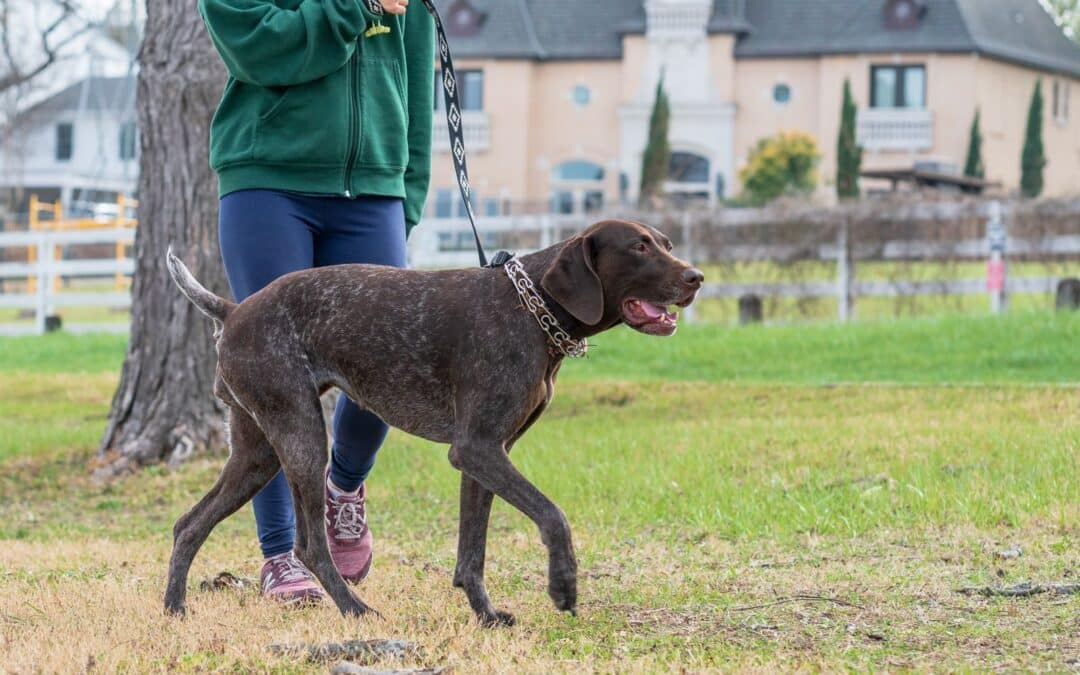
Because the whistle sound is clear and sharp, dogs can hear it much farther away than a human voice. This is why whistles are often used in working dog environments like hunting or herding, where dogs may be hundreds of feet away.

Photo by Sarah Sheedy on Unsplash
Why Some Trainers Use a Dog Whistle During Dog Training
In the dog training world, trainers choose tools that help create clarity and consistency for the dog.
A dog whistle offers several advantages compared to verbal commands.
Consistent Sound
Human voices naturally change. We might shout louder when we’re frustrated or soften our voice when we’re relaxed.
A whistle eliminates that variability. The cue always sounds the same.
Dogs learn patterns quickly, so a consistent cue can help dogs respond faster over time.
Long Distance Communication
One major advantage of whistle commands is range.
Your dog can hear whistle frequencies much farther than a human voice carries. This becomes helpful during walk time in open areas, hiking trails, or fields where your dog might move farther away.
Even strong wind or environmental noise often won’t interfere with whistle cues.
Clear Cue in Busy Environments
In places with distractions — busy parks, loud neighborhoods, or crowded areas like outside Walmart — dogs may struggle to distinguish their owner’s voice from background noise.
A whistle produces a unique cue that stands out from environmental sounds.
This helps regain your dog’s attention when they’re excited or distracted.
The Difference Between a Standard Dog Whistle and a Silent Whistle
There are two common types of whistles used in dog whistle training.
Standard Dog Training Whistle
This type of whistle produces an audible sound that both humans and dogs can hear.
These whistles are often used by trainers who want a strong recall cue that is easy to hear during training sessions.
Silent Whistle
A silent whistle produces very high frequencies that most humans cannot hear, but dogs can.
This version can be useful when other dog owners nearby might not want to hear whistle commands repeatedly.
However, the word “silent” can be misleading. Some people can still hear a faint pitch depending on the whistle’s frequency.
Brands like Acme whistles offer adjustable pitches so owners can experiment with the sound that works best for their dog.
How Recall Training Works With a Dog Training Whistle
The goal of recall training is to teach your dog to return to you immediately when called.
Whistles simply provide another way to give that recall command.
During early training, the whistle sound is paired with something positive so the dog begins to build a strong association.
A typical training pattern might look like this:
- Blow the whistle
- The dog looks toward the handler
- The dog runs back toward the handler
- The dog receives a reward
That reward might be:
- a treat
- praise
- playtime
- a favorite toy
Over time, the dog begins to learn that the whistle sound always leads to a positive outcome.
Eventually, the dog begins responding instantly whenever the whistle cue appears.
This is why recall training often becomes incredibly reliable once the pattern is established.
Tips for Teaching Dog Whistle Commands Successfully
If you decide to try dog whistle training, there are a few important things to keep in mind.
Start Indoors First
Begin training in a quiet space with minimal distraction.
This helps your puppy or adult dog focus on learning the new cue.
Pair the Whistle With a Reward Immediately
Timing is everything.
The moment your dog responds to the whistle cue, reward them.
Dogs learn fastest when the reward arrives immediately after the correct behavior.
Use the Same Pattern Every Time
Consistency matters.
Use the same number of whistle blows each time so your dog recognizes the pattern.
For example, two short blows might always mean recall.
Gradually Increase Distance
Once your dog responds consistently indoors, practice outside.
Start with short distances, then gradually expand the range so your dog learns to return from farther away.
Practice Around Distractions
Eventually, your dog should practice recall around distractions such as:
- other dogs
- people
- moving vehicles
- busy environments
This helps your dog stay focused even when something interesting appears.

Photo by Laura Repsone on Unsplash
Are Dog Training Whistles Actually Necessary
Here’s the honest answer.
A dog training whistle can be helpful, but it’s not required for successful dog training.
Most dogs can develop excellent recall using verbal commands, hand signals, and consistent rewards.
In fact, many trainers prefer verbal recall cues because they’re easier to use in everyday situations.
Whistles are most useful when:
- dogs are working at long distances
- environments are extremely noisy
- owners want a unique recall cue different from their voice
For everyday pet training, strong recall usually comes down to consistency, reinforcement, and practice.
The tool itself matters far less than the training behind it.
The Real Secret to Reliable Recall
Whether you use a whistle, your voice, or a hand signal, reliable recall depends on one thing above all else.
Your dog must believe coming back to you is always worth it.
If your dog expects good things when they return — praise, treats, play, attention — they’ll come back quickly.
If recall sometimes leads to negative experiences like being scolded or ending fun activities, dogs may hesitate.
That’s why trainers focus so heavily on rewarding the recall behavior.
Over time, the dog begins returning automatically whenever they hear the cue.
When Professional Training Helps
Teaching recall can be challenging, especially for high-energy dogs or dogs that become distracted easily.
Working with professional trainers can help accelerate the learning process and prevent common mistakes.
At Ruff House Dog Training, we focus on practical skills that improve everyday life with your dog.
Whether you’re teaching a puppy basic recall, working with two dogs in the same household, or trying to strengthen obedience around distractions, structured training sessions can help your dog develop reliable behavior.
Start Training Today
If your dog struggles to come when called, runs off during walks, or ignores commands when something exciting appears, structured training can make a huge difference.
At Ruff House Dog Training, we help dog owners throughout Washington DC, Maryland, and Virginia build stronger communication with their dogs using practical, real-world training techniques.
Whether you’re interested in recall training, obedience training, or solving frustrating behavior problems, we’re here to help.
Book your session, claim your spot, and transform stress into success with your dog.
Because your dog won’t train himself.
Helpful Resources for Whistle Training
Whether you are teaching a reliable recall at the dog park or simply trying to communicate better on your daily walks, having the right information makes all the difference. Transitioning to a high-frequency dog whistle is a rewarding process that boosts safety and strengthens the bond with your dog.
To help you get started on the right foot, we have gathered a list of excellent, non-competitive training resources and trusted equipment makers.

RuffHDT Official Logo
Essential Dog Training Whistle Links
- ACME Whistles: Explore a trusted selection of high-frequency dog whistles perfect for establishing a clear, consistent recall with your everyday companion.
- American Kennel Club (AKC) Training Advice: Read expert tips on how to safely and effectively teach your dog to come when called using positive reinforcement techniques.
- Karen Pryor Clicker Training: Learn the foundational principles of positive reinforcement and marker training that pair perfectly with your new dog whistle.
- Victoria Stilwell Positively: Discover force-free training methods to improve communication and build a stronger, happier bond with your dog through sound-based cues.
- Whole Dog Journal: Access comprehensive, easy-to-follow guides on transitioning your pet from verbal commands to reliable, long-distance whistle cues.
- RSPCA Dog Training Advice: Find practical, welfare-focused advice on using training tools safely to ensure your dog actually enjoys learning basic commands.
- Dunbar Academy: Master fundamental dog behavior concepts to help your pet understand and respond enthusiastically to your whistle during outdoor adventures.
Ready to transform your daily walks? Grab a reliable whistle, visit one of the positive reinforcement guides above, and start practicing your recall today!