If your dog thinks “sit” means “launch off the sofa like a caffeinated squirrel,” you’re in the right place.
Owning a dog is one of life’s greatest joys, but let’s be honest—it can also be chaotic. Whether you’re dealing with a puppy who treats your shoes like chew toys or an adult dog who believes they are the neighborhood watch captain, behavioral issues can strain the bond between you and your pet.
I’m Ryan, the founder of Ruff House Dog Training. We are a veteran-owned, values-driven local business serving families across Virginia, Maryland, and D.C. Our mission is simple: provide practical, real-life dog training solutions for busy families. We don’t do cookie-cutter franchise programs; we do honest work that gets results.
In this guide, we’re going to cover everything you need to know about getting your dog back on track. We’ll explore the famous 3-3-3 rule, determine the best age for training, identify red-flag behaviors, and break down the costs of dog obedience training in Virginia.
Ready to go from chaos to calm? Let’s do this. Book your training classes today.
What Is the 3-3-3 Rule in Dog Training?
When you bring a new dog home—whether it’s a rescue or a breeder puppy—you might expect instant connection and perfect behavior. However, biology has other plans. The 3-3-3 rule is a general guideline representing the three stages of a dog’s adjustment period: 3 days, 3 weeks, and 3 months.
The 3-3-3 Rule Explained
- 3 Days (Decompression): Your new dog is likely overwhelmed. They might not eat, they might hide, or they might test boundaries. They aren’t being “bad”; they are just scared and unsure.
- 3 Weeks (Settling In): They are starting to learn your routine. This is often when behavioral issues start to pop up because they are feeling comfortable enough to let their guard down.
- 3 Months (Building Trust): By now, they know they are home. This is where true bonding happens, and where ingrained habits (good or bad) start to solidify.
Understanding this timeline is crucial for obedience training because it helps manage your expectations. If you try to force advanced obedience on day two, you’re setting everyone up for failure.
How I Use the 3-3-3 Rule in My Training Sessions
At Ruff House, we don’t fight against nature. We use this timeline to structure our training. In the early days, we focus on structure and leadership. We teach you how to use body language and clear communication to show your dog that you’ve got everything under control.
We meet the dog where they are. If they are in the decompression phase, we focus on stress reduction. If they are in the three-month phase, we ramp up the structure to ensure they understand their place in the family pack.
Tips Owners Can Use Today
You don’t have to wait for a professional to start. Here are a few things you can do right now:
- Create a Routine: Dogs thrive on predictability. Feed and walk them at the same time daily.
- Decompression Walks: Let them sniff! Mental stimulation is just as tiring as physical exercise.
- Safe Spaces: Ensure they have a crate or a bed where they can retreat if things get too loud or chaotic.
If you want a head start, you can download our free behavior guide on our website.
What Is the Best Age for Obedience Training?
The short answer? Right now. But the approach changes depending on how many candles are on your dog’s birthday cake.
Puppy Training (8 Weeks and Up)
Puppies are sponges. From 8 weeks old, they are learning constantly. This is the critical window for socialization and engagement.
- Safety First: We teach them that the world isn’t scary.
- Foundation Skills: Simple luring and engagement to build a bond.
- The Truth About Teething: Chewing is normal, but we redirect it. Remember, teething is not a personality trait. I promise.
The Teenage Dog Stage (6–18 Months)
Ah, adolescence. This is the age where your sweet puppy suddenly “forgets” their name and decides that chasing a squirrel is more important than your existence.
- The Challenge: Hormones are raging, and independence is kicking in. They will test boundaries.
- The Focus: Consistency is key here. We double down on impulse control and leash manners. This is often the most frustrating stage, but it’s also the most rewarding when you break through.
Adult Dogs (Anytime, Seriously)
“You can’t teach an old dog new tricks” is a myth. Older dogs often have longer attention spans than young dogs.
- Pacing: We might need to undo some bad habits first, but adult dogs are incredibly capable learners.
- Guidance: They just need clear communication to understand what you want from them.
Which Program Fits Each Age?
- 90-Minute Miracle: Perfect for fast resets, specific issues, or owners who need immediate tools to stop a specific behavior.
- 6-Week Obedience Training: Ideal for puppies and adolescents needing structured development and command reliability.
- Custom Training: Best for behavioral modification regarding aggression, anxiety, or unique household needs.
Red Flag Dog Behaviors and Body Language: What They Mean
Every dog has bad days. But when does a “bad habit” turn into a behavioral crisis? Knowing the difference can keep your family (and your dog) safe.
Behaviors That Signal Trouble
If you see these, it’s time to call a professional:
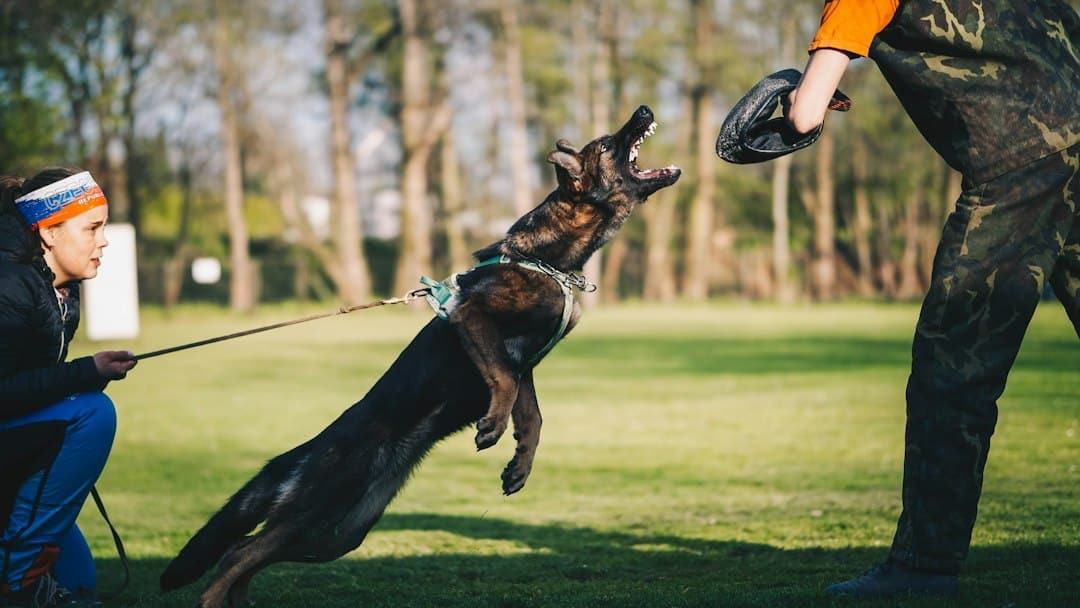
- Reactivity: Barking, lunging, or growling at other dogs or people on walks.
- Aggression: Snapping or biting (even “air snapping”).
- Resource Guarding: Growling when you get near their food, toys, or favorite spot on the couch.
- Destruction: Eating drywall, destroying crates, or chewing furniture when you leave (separation anxiety).
- Lack of Impulse Control: Jumping on guests, bolting out doors, or being unable to settle.
What’s Normal vs. What Needs Intervention
Puppy nipping is normal; an adult dog biting is not. A dog barking at the doorbell is common; a dog that you cannot calm down for 20 minutes after the guest arrives needs intervention. Breed matters, too—a herding dog will nip heels, and a hound will follow scents. We help you distinguish between biological drives and behavioral problems.
How I Approach Red-Flag Behaviors
At Ruff House Dog Training, there is no judgment. We evaluate the dog in front of us honestly. We use real-world techniques to create stability and good behavior. We focus on leadership and structure, not gimmicks. We don’t just put a band-aid on the issue; we find the root cause and give you the tools to fix it.
No judgment—just real solutions. Book your training session today.
How Much Will It Cost to Train My Dog in Virginia?
Pricing is often the first question owners ask, and rightly so. In Virginia, dog training costs can vary wildly.
Why Training Costs Vary
The price tag depends on several factors:
- Behavior Type: Basic obedience is generally less expensive than modifying severe aggression.
- Time Commitment: A single session vs. a 6-week course.
- Customization: Does your dog need a tailored plan for specific triggers?
Our Ruff House Training Options
We believe in transparent value.
- 90-Minute Miracle: Fast, efficient, laser-focused problem-solving. You get immediate tools you can use that same day.
- 6-Week Obedience Course: Comprehensive foundation skills, leash manners, and command reliability.
- Fully Custom Programs: For aggression, anxiety, advanced work, or unique household needs.
Value Beyond the Session
When you hire Ruff House, you aren’t just paying for an hour of our time. You get:
- Unlimited Post-Session Support: We don’t ghost you. Call us anytime issues arise.
- Proven Success: We have over 400 happy clients who have seen real changes.
- Training Experience: You get a veteran-owned business that brings discipline, empathy, and fairness to the table.
Why Cheap Isn’t Better in Dog Obedience Training
You can find cheaper trainers. You can also find franchise “quick fix” programs that promise the moon. But when it comes to behavior, you get what you pay for. Cheap training often relies on cookie-cutter methods that don’t account for your dog’s specific personality. Worse, ineffective training can escalate aggression or fear.
We offer a personalized, results-driven approach that works for your life.
Claim your spot—training sessions fill fast! Because your dog won’t train himself.
Why Our Real-World Dog Training Works
What makes Ruff House different from the big box stores or the franchises?
Veteran-Owned Values
Our coaching style is built on discipline, fairness, and empathy. We are structured, but we also have a sense of humor. We are honest about what your dog needs and what you need to do to help them.
Customized Training Built Around Your Family
We know you have a job. We know you have kids. We know you have a commute. We don’t give you a training plan that requires 4 hours a day. We acknowledge the chaos of family life and build a plan that fits into it.
Long-Term Success With A Professional Dog Trainer Over Short-Term Tricks
We don’t use magic words, and we don’t want your dog to be dependent on treats forever. We teach life skills. We teach your dog how to make good choices.
Tailored for Every Breed
From hunting dogs to lap dogs, we understand breed instincts. We know a Malinois needs a different approach than a Cavalier King Charles Spaniel. Every dog can succeed with the right foundation.
Helpful Resources for Dog Owners
Education is a huge part of being a responsible dog owner. Here are a few high-quality resources to help you learn more about dog behavior and health:
- American Kennel Club (AKC) Breed Explorer: Understand the specific traits and history of your dog’s breed.
- The Association of Professional Dog Trainers (APDT): Great articles on general dog behavior and safety.
- ASPCA Poison Control: A vital resource to keep bookmarked in case your dog eats something they shouldn’t.
- Virginia Department of Agriculture and Consumer Services: Information on local dog laws and dangerous dog registries in Virginia.
- BringFido: A guide to dog-friendly parks, restaurants, and hotels in Virginia and beyond.
- PetMD: Veterinary-approved articles on dog health, nutrition, and symptom checkers.
- Whole Dog Journal: In-depth reviews of dog food, gear, and natural care advice.
Start Your Dog’s Transformation Today
You aren’t a bad owner because your dog has behavior issues. You just need the right tools. Behavioral problems don’t resolve themselves, but with the right guidance, you can change the entire relationship you have with your dog.
Pet parents, imagine a walk without pulling. Imagine a doorbell ringing without chaos. Imagine trusting your dog again.
Stop the barking, the chewing, and the stress.
Book your training session today. Schedule your 90-Minute Miracle now and get back to enjoying life with your best friend.