That chaotic morning scramble, the yank on your shoulder every time a squirrel appears, the relentless barking at the mail carrier—sound familiar? If you’re a busy parent, an overwhelmed new puppy owner, or someone with a reactive dog who has “tried everything,” you’re in the right place. This isn’t about creating perfect, Instagram-ready dogs. This is real training for real life.
Here, you’ll find no judgment, no cookie-cutter training methods, and no gimmicks promising overnight miracles. We’re Ruff House Dog Training, a veteran-owned company serving DC, Maryland, and Virginia, and we specialize in helping families find peace with their four-legged members. We understand the stress and frustration that come with a difficult dog, and we’re here to guide you through it.
From chaos to calm—let’s do this.
What Is Dog Obedience Training and Why Does It Matter?
Dog obedience training isn’t just about teaching essential commands like “sit” and “stay.” At its core, it’s about building a clear communication system based on structure, accountability, and mutual respect. It’s the foundation for a healthy and positive relationship where your dog looks to you for guidance instead of making its own (often poor) decisions.

Get the Ruff to Ready framework and start making progress with your dog today.
"*" indicates required fields
So why do so many dogs—and their owners—struggle in traditional training classes?
- Too Many Distractions: A room full of other dogs and new smells can be too overstimulating for a reactive or high-energy dog to learn effectively.
- One-Size-Fits-All Programs: Group classes often follow a rigid curriculum that doesn’t account for your dog’s unique breed, personality, or specific behavioral issues.
- Focus on Commands, Not Real-World Application: Your dog might sit perfectly in a quiet room for a treat, but can they hold that command when a jogger runs past your house?
Relationship-based training bridges this gap by focusing on improving communication and behavior where it matters most: at home and in your neighborhood. It’s about teaching your dog how to manage its impulses and make good choices in everyday situations.
Basic Obedience Training Builds Good Behavior for Life For Several Reasons
The term “basic obedience” is a bit misleading. For reactive or high-energy dogs, mastering the fundamentals is a significant achievement that requires immense focus and self-control. It’s not just about commands; it’s about teaching emotional regulation.
A solid basic obedience program should include these basic principles:
Core Commands
Sit, down, place, heel, and recall (coming when called).
Leash Manners
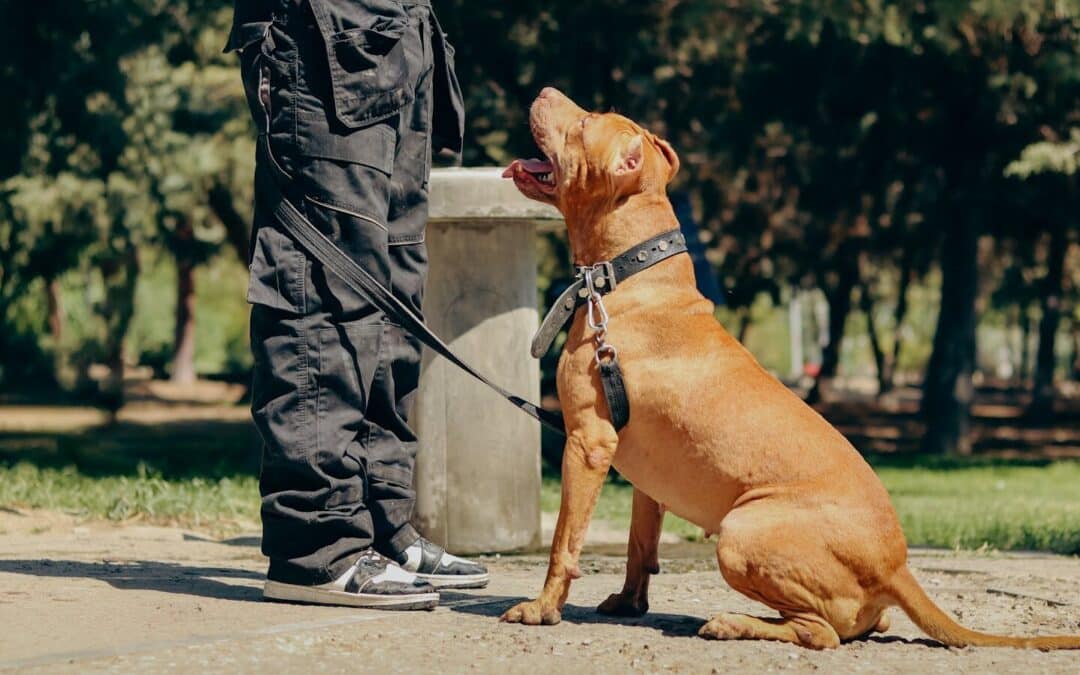
Walking calmly without pulling, lunging, or reacting to triggers.
Impulse Control
Learning to wait patiently for food, at doorways, and during exciting moments.
For a reactive dog, proper leash training is more than just a convenience—it’s a critical safety tool. A dog that walks calmly on a leash is less stressed, which reduces the likelihood of a reaction. It transforms dreaded walks into enjoyable experiences for both you and your dog.
End the barking, chewing, and chaos.
Dog Training Methods Explained (Without the B.S.)
Dog training has evolved significantly over the years. Gone are the days of rigid, force-based methods. Today, the conversation revolves around several different approaches, and it’s easy to get lost in the debate.
Here’s a quick breakdown of common methods:
Positive Reinforcement
This method focuses on rewarding desired behaviors with treats, praise, or toys. It’s a fantastic way to build a positive association with training, but it can sometimes fall short when addressing severe problem behaviors without clear consequences for unwanted actions.
Balanced Training
This approach uses both rewards for good behavior and fair, clear corrections for unwanted behavior. It creates a more complete picture for the dog, helping them understand both what to do and what not to do.
At Ruff House, we operate on a simple philosophy: tools don’t train dogs—people do. We believe in a customized, balanced approach. We might use a variety of tools, from a simple slip lead to a prong collar or e-collar, but only after educating the owner on their proper, humane use. These tools are communication devices, not punishment tools. Our methods are always tailored to the individual dog, its breed, its specific behaviors, and the family’s lifestyle.
The 3-3-3 Rule for Dog Training
If you’ve recently adopted a rescue dog, you may have heard of the 3-3-3 rule. It’s a guideline to help owners set realistic expectations for their new family member’s adjustment period.
- First 3 Days: Your dog is decompressing. They may feel overwhelmed, scared, and unsure of their new surroundings. Don’t expect much more than them just getting used to the space.
- First 3 Weeks: Your dog is starting to learn your routine. They’re figuring out feeding times, walk schedules, and the general rhythm of the household.
- First 3 Months: Your dog is beginning to build trust and feel secure. Their true personality starts to shine through as they realize this is their forever home.
Pushing for strict obedience too quickly can backfire, causing unnecessary stress and hindering the bonding process. We structure our training plans with this timeline in mind, introducing new skills at a pace your dog can handle.
Start your dog’s transformation today.
Understanding the 7-7-7 Rule in Dog Training
Similar to the 3-3-3 rule, the 7-7-7 rule is another framework, often applied to puppies. The specifics can vary, but it generally outlines developmental milestones in the first 7 weeks, 7 months, and beyond. It highlights critical periods for socialization and learning. While these rules are helpful for setting expectations, they are not a substitute for structured training. A consistent obedience program complements these natural developmental stages, providing the boundaries and communication your dog needs to navigate the world confidently.
Because your dog won’t train himself.
Best Age for Dog Obedience Training
What’s the best age to start obedience training? The simple answer is: now. While the focus may differ between a puppy and an adult dog, it’s never too late to create positive change.
- Puppies (8 weeks – 6 months): The focus should be on positive socialization, establishing clear boundaries, and preventing common problem behaviors like nipping and jumping.
- Adult Dogs (6 months+): Training can address ingrained habits like reactivity, leash pulling, or resource guarding. Adult dogs are fully capable of learning new behaviors and breaking old patterns.
Early intervention is always best, but don’t feel discouraged if you have an older dog with long-standing issues. With consistency and the right guidance, any dog can learn.
Claim your spot—training sessions fill fast!
Red Flag Dog Behavior That Signals You Need Training
Some behaviors are more than just minor annoyances; they are red flags indicating deeper issues that require professional intervention. Don’t ignore them.
- Reactivity: Lunging, barking, or growling at other dogs, people, or vehicles.
- Resource Guarding: Becoming possessive or aggressive over food, toys, or even people.
- Fear-Based Aggression: Snapping or biting when feeling cornered or threatened.
- Extreme Leash Pulling: Dragging you on walks to the point of being a safety hazard.
These behaviors rarely resolve on their own and often worsen over time. Early intervention is the key to preventing a serious incident and restoring peace to your home. The good news is that these issues are almost always fixable with a dedicated, structured approach.
Products That Can Help Your Training Journey
While skilled dog trainers are our most valuable asset, the right gear can support your progress. Here are a few popular products on the market right now:
- Herm Sprenger Prong Collar: A safe and effective tool for communication when used correctly.
- E-Collar Technologies Mini Educator ET-300: A modern, humane remote training collar for off-leash reliability. ecollar.com
- Elevated Pet Bed from Kuranda: Perfect for teaching the “place” command and providing a designated spot for your dog.
- KONG Classic Dog Toy: A durable toy that can be stuffed with treats to combat boredom and crate anxiety.
- Dog Leashes by Leerburg: Sturdy, comfortable leashes that provide a secure grip and excellent control.
- PetSafe Easy Walk Harness: A good option for mild pullers that gently discourages lunging without choking.
- Outward Hound Fun Feeder Slo Bowl: Helps high-energy dogs slow down during meals, preventing bloat and promoting mental engagement.
Why Our Dog Obedience Training Gets Real Results
We’re not a big-box store or a national franchise. Ruff House Dog Training is a veteran-owned business built on the values of discipline, honesty, and accountability.
Here’s what sets us apart:
- Custom Programs: We don’t do group classes. Every training session, from our 90-Minute Miracle to our 6-Week Obedience Program, is tailored to you and your dog.
- Focus on High-Needs Dogs: We specialize in the tough cases—the reactive, anxious, and high-energy dogs other trainers might turn away.
- Unlimited Post-Session Support: Our commitment to you doesn’t end when the session is over. We offer unlimited support to help you navigate challenges as they arise.
We provide the training goals, tools, and coaching, but you’re the one who will transform your dog’s behavior. We’re here to empower you to become the confident leader your dog needs.
Book your training session today.
Your Dog Can Learn—Ruff House Dog Training Will Show You How
Success isn’t about perfection. It’s not about having a dog that never makes a mistake. Success is a quiet home. It’s a peaceful walk around the block. It’s having friends over without locking your dog in another room. It’s enjoying your life with your dog again.
One client once told us, “Before Ryan, my dog treated the living room like his personal nightclub, and the cat was the unwelcome bouncer. Now, they’re more like quiet roommates who occasionally argue over the remote.” That’s success.
You can stop the endless Googling and watching conflicting YouTube videos. As an experienced, local trainer invested in your success, we’re ready to help you and your dog learn how to achieve real, lasting change.
Schedule your 90-Minute Miracle Now.
Start your Dog’s Transformation Today.