Does your home feel more like a circus than a sanctuary? If your dog treats the doorbell like a declaration of war or drags you down the street during what should be a peaceful walk, you are not alone. Many Maryland families love their dogs deeply but struggle with behaviors that make daily life stressful.
At Ruff House Dog Training, we understand that you don’t need a show dog; you need a family member who listens. We are a local, veteran-owned business—not a franchise—serving the Washington D.C., Maryland, and Virginia region. Our mission is simple: we partner with you to restore peace, communication, and joy in your home.
We set realistic expectations from day one. Obedience training isn’t about robotic perfection. It is about building reliable, real-life behavior that keeps your dog safe and your family happy. Because, let’s face it, your dog won’t train himself.
Dog Obedience Training for Everyday Life
Why does obedience training matter? It isn’t just about showing off a cool trick at a barbecue. True obedience is rooted in communication, structure, and safety.
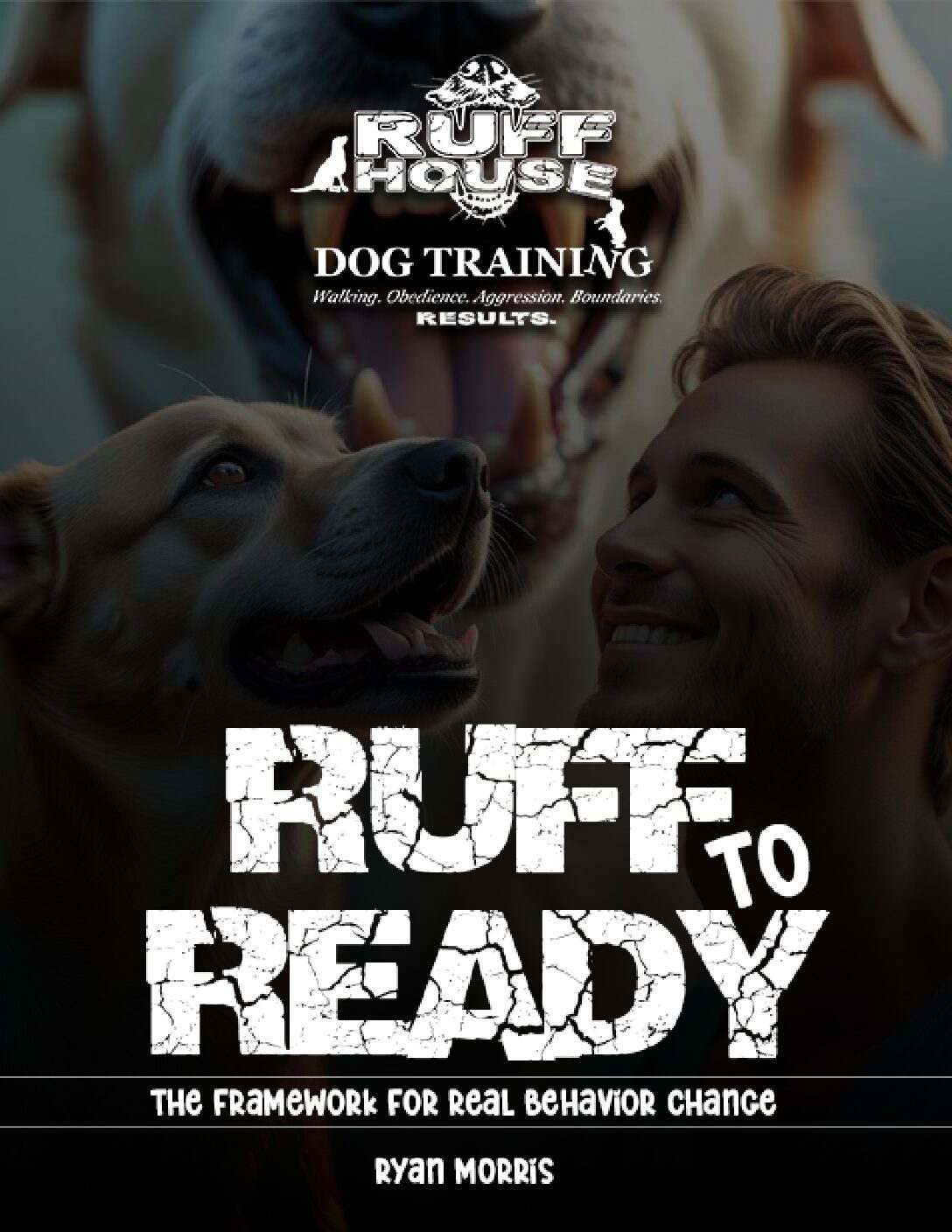
Get the Ruff to Ready framework and start making progress with your dog today.
"*" indicates required fields
When your dog understands what is expected of them, their anxiety drops. They look to you for guidance rather than making their own (usually poor) decisions. This shift reduces stress for everyone in the household, including children and other pets.
While YouTube tips can offer general advice, they often lack the nuance required for your specific situation. Professional, customized dog training addresses the dog in front of you. We focus on calm and good behavior where it matters most: inside your home, on your daily walks, and around real-world distractions.
Basic Obedience Training Explained
“Basic obedience” is a term thrown around often, but what does it actually mean? In plain English, it is the foundation of a shared language between you and your dog.
At Ruff House, we focus on core skills that translate to better living:
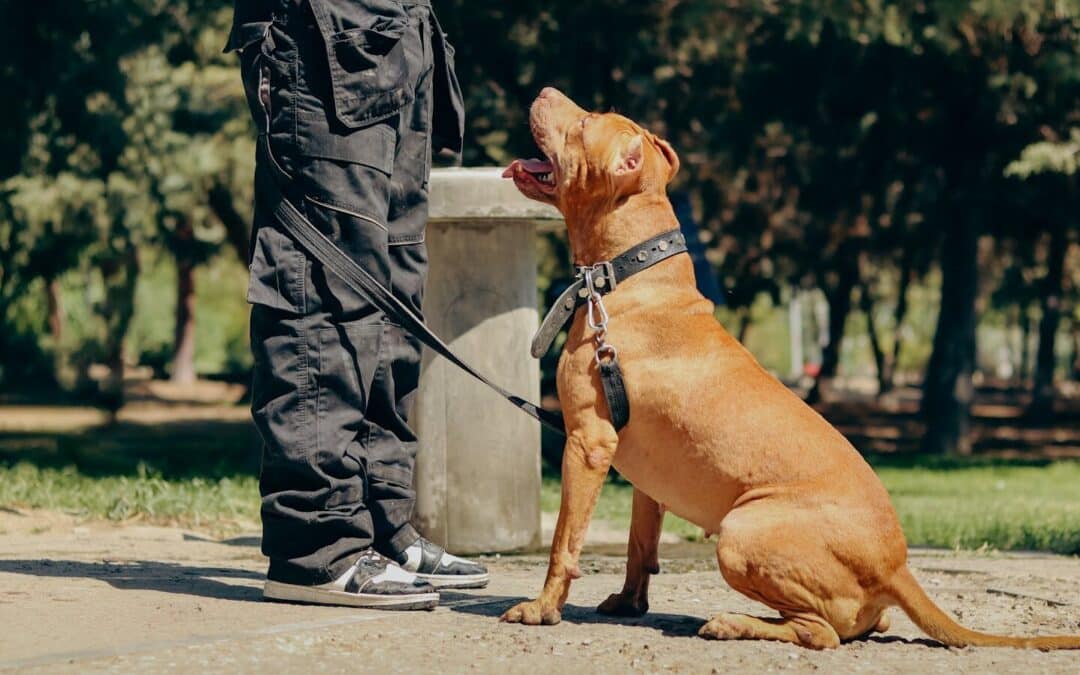
Leash Training
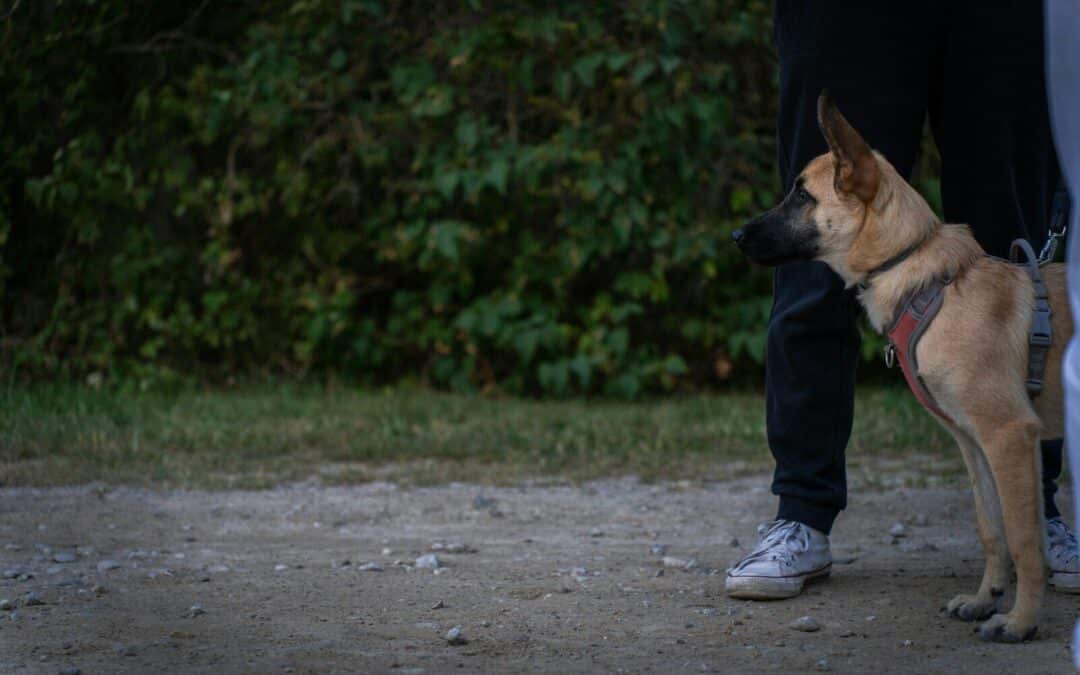
Walking calmly without pulling or reacting to triggers.
Crate training
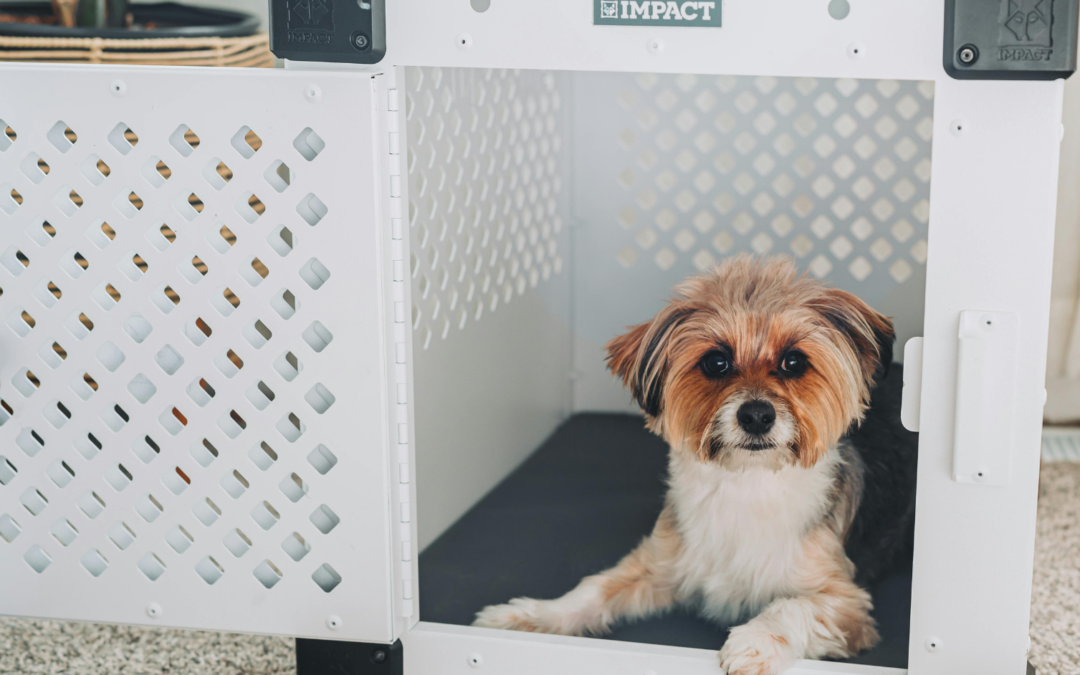
creating a safe space for your dog that aids in housebreaking and anxiety reduction.
Impulse control
Teaching your dog to wait politely around people, food, and other pets.
It is important to clarify what basic obedience is not. It is not a tricks-only class where your dog learns to “shake” but still jumps on guests. It isn’t a cookie-cutter group class where one method is forced onto every dog. And it certainly isn’t a quick fix. We focus on practical approaches that solve the actual problems disrupting your life.
Dog Training Expectations and the 3-3-3 Rule
When bringing a new dog into your home—whether it is a puppy or a rescue—or starting a new training regimen, patience is vital. The 3-3-3 rule is a great framework for understanding your dog’s adjustment period.
The First 3 Days
This is the decompression phase. Your dog may feel overwhelmed, scared, or unsure. They might test boundaries or withdraw. During this time, keep things quiet and low-pressure.
The First 3 Weeks
Your dog is starting to settle in. This is when they begin to learn your routine and structure. You might see their true personality start to emerge—both the good and the challenging parts. This is the critical window for establishing consistency.
The First 3 Months
By this point, your dog should feel secure. They understand that they are home. This is where trust and a bond are truly cemented.
This rule applies to puppies, rescue dogs, and even older dogs entering a new environment. If you rush the process, you risk setbacks. There is no judgment here—just real solutions for whatever stage your dog is in.
Dog Training Foundations and Socialization
Socialization is another buzzword that is often misunderstood. It doesn’t mean letting your dog run up to every person and dog they see. In fact, that can create reactivity. True socialization is about neutrality and confidence.
We often refer to the 7-7-7 rule for puppies and young dogs. By the time a puppy is roughly 4 months old, they should have been safely exposed to:
- 7 different types of surfaces (grass, carpet, gravel, etc.).
- 7 different types of people (kids, adults, people wearing hats, etc.).
- 7 different environments.
Early exposure builds a confident, stable dog who isn’t easily spooked by the world. It helps them understand that new things aren’t necessarily scary things.
When to Start Obedience Training: The Best Time to Start Training Was Yesterday. The Second-best Time is Today
For Puppies: Basic training should begin the moment you bring them home. This includes potty training, crate training, and establishing household rules. Puppies are sponges; they are learning every second they are awake. Make sure they are learning the right things.
For Adult and Older Dogs: Let’s bust the myth that “you can’t teach an old dog new tricks.” It is never too late to train an adult dog. While they may have more ingrained habits than a puppy, they also have longer attention spans.
If your untrained adult dog is currently running the house—stealing food off counters or dictating when you wake up—it is time to intervene. We can help you reset those boundaries.
Red Flag Dog Behaviors to Watch For
Sometimes, behaviors that seem like “quirks” are actually warning signs. Ignoring these red flags usually makes them worse over time. Keep an eye out for:
- Growling, snapping, or resource guarding: If your dog gets aggressive over food, toys, or spaces, this is a safety issue.
- Extreme reactivity on leash: Lunging, barking, or redirecting aggression when seeing other dogs or people.
- Ignoring commands: If your dog selectively hears you only when you have a treat, the relationship lacks respect.
These behaviors signal a lack of clarity and structure. Structured obedience training creates safety by teaching the dog how to handle stress and frustration appropriately. At Ruff House, we provide judgment-free support to tackle these tough issues head-on.
Dog Training Classes vs. Private Training
Group classes can be fun, but they aren’t always the most effective way to learn. They move at the pace of the group, not your dog.
Private training often works better for:
- Busy professionals: You need flexible scheduling and efficient sessions.
- Families with kids: You need safety protocols that work inside your specific home environment.
- Dogs with behavior challenges: Reactive dogs often cannot function in a group setting until they have foundational training.
We train dogs different ways and offer service options designed for real results, including our 90-Minute Miracle (a focused session for immediate tools) and our 6-Week Obedience Training (a structured program for lasting routines). We also offer fully custom programs for complex cases.
Our Dog Training Philosophy
Ruff House Dog Training is veteran-owned, and we bring those values to our work: structure, consistency, and follow-through. But we also bring empathy and humor. Training should be a bonding experience, not a boot camp.
We balance guidance with accountability. We focus on the relationship between you and your dog, not just bribing them with treats. Our goal is real-life training that holds up when you have guests over, when the delivery driver rings the bell, or when you encounter a squirrel on a walk.
With over 400 happy clients across Maryland, D.C., and Virginia, our methods have been proven to work for families just like yours.
What Success Really Looks Like After Obedience Training
So, what happens after the training is done? Success looks like peace of mind.
It looks like a calm walk in the park where your arm isn’t being pulled out of its socket. It looks like a dog that goes to their “place” when guests arrive instead of jumping on them. It looks like a dog that listens to you even when life gets busy and chaotic.
Ultimately, success is confidence for both you and your dog—confidence that you can handle your dog, and confidence that your dog can handle the world.
Helpful Resources for Dog Owners
Education is a huge part of being a responsible dog owner. Here are some reputable resources to help you learn more about dog behavior, safety, and health.
- American Kennel Club (AKC): A massive database of breed-specific information and training advice. Visit AKC
- ASPCA: Excellent resources on animal poison control and general behavioral tips. Visit ASPCA
- Pet Poison Helpline: A critical resource to keep bookmarked for emergencies. Visit Pet Poison Helpline
- BringFido: A guide to pet-friendly hotels, restaurants, and parks in Maryland and beyond. Visit BringFido
- Maryland State Parks (Pet Policy): Know where you can legally and safely hike with your dog. Visit MD State Parks
- Association of Professional Dog Trainers (APDT): Articles and resources on how dogs learn. Visit APDT
- Whole Dog Journal: In-depth reviews of dog food, gear, and training methods. Visit Whole Dog Journal
Start Your Dog’s Transformation Today
You don’t have to live with the barking, the chewing, and the chaos forever. You can have the calm, reliable dog you’ve always wanted. There are no franchise scripts here—just real, effective dog training that works to build a positive relationship between you and your dog.
From Chaos to Calm—Let’s Do This.